


Blasting data at warp speed
On a calm April evening in Cape Canaveral, Fla., all eyes were on a 32-story rocket ship as exhaust started streaming from its engine. Four astronauts sat inside the capsule, ready to embark on NASA’s first crewed lunar mission in 50 years.
Outside the airtight capsule, Mark Padula ’83, MS ’90, stood in a crowd of 10,000 gathered at a safe distance from the launchpad. When the countdown reached takeoff, the rocket lifted off the pad and the crowd erupted in cheers. The rocket got smaller as it blasted away, and Padula watched years of hard work head for the far side of the moon.
Rocket launches are often synonymous with exploration. Whether carrying astronauts or not, rockets are usually probing questions about the solar system and what humans can do in space. This launch was no different. Artemis II was a test to confirm that the Orion spacecraft, and all of its systems, could operate in deep space. It was another key step toward getting humans back on the moon—and eventually to Mars.
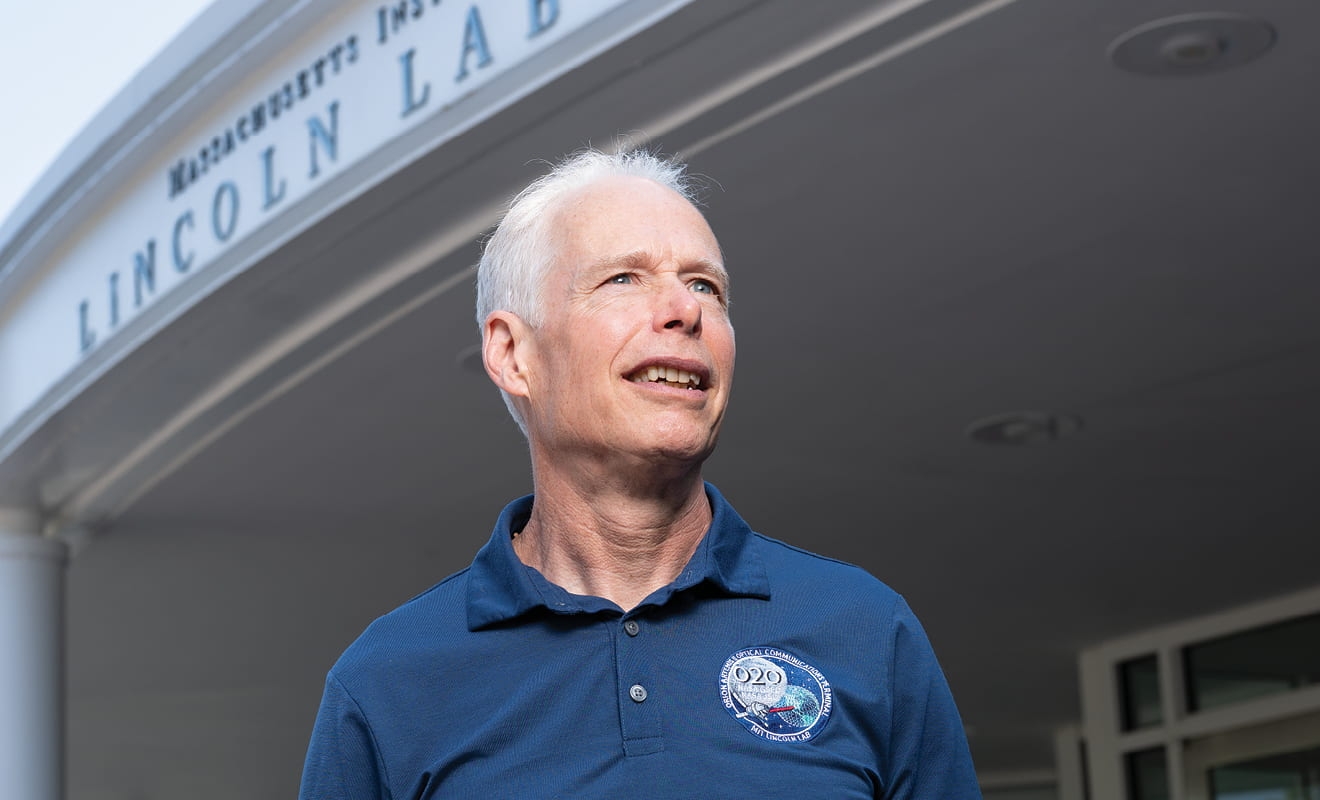
Through his work with the Lincoln Laboratory at Massachusetts Institute of Technology, Padula helped develop one of the key systems that NASA was testing through Artemis II. A new, cutting-edge communications system that could revolutionize NASA’s capacity to transmit data between outer space and Earth. Known as the Orion Artemis II Optical Communications System (O2O), it uses laser beams instead of traditional radio waves to get data to and from space, at rates radically faster than traditional methods, and from distances that can reach the moon and beyond.