


DOE national quantum research centers reach breakthrough towards building scalable quantum computers
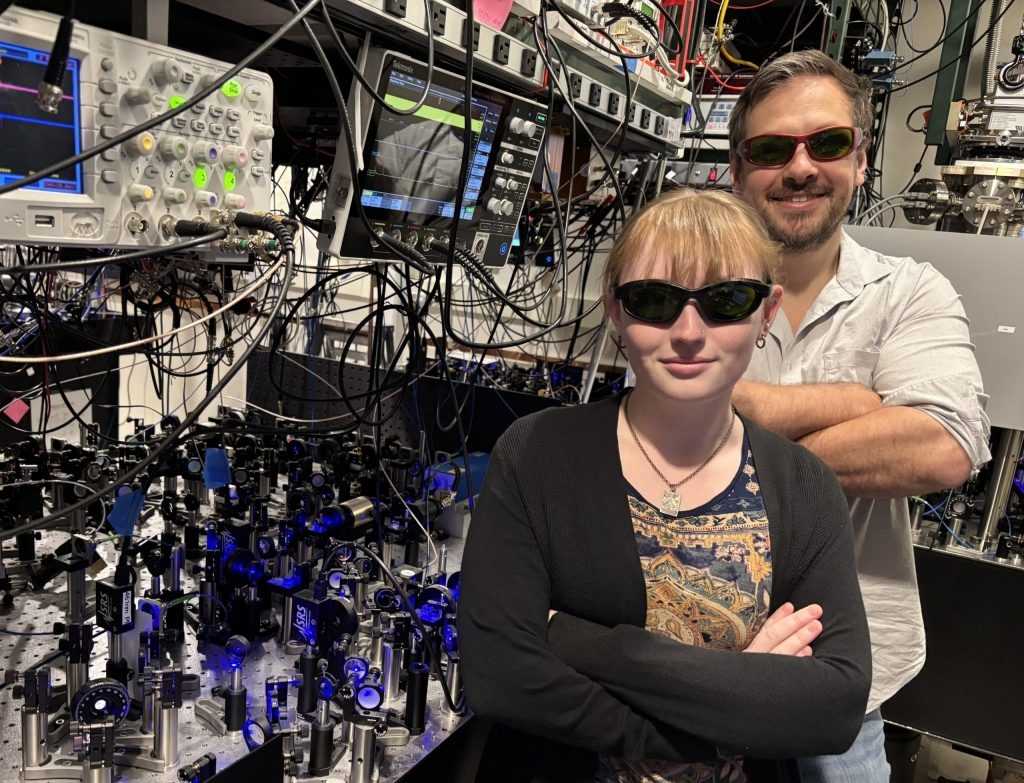
Researchers at Fermi National Accelerator Laboratory and the Massachusetts Institute of Technology’s Lincoln Laboratory have successfully trapped and manipulated ions using in-vacuum cryoelectronics, allowing for reduced thermal noise and improved sensitivity. This proof-of-principle experiment marks an important advancement toward building large-scale ion-trap quantum computing systems.
The co-integration of ion traps and deep cryogenic control circuits project was made possible through collaboration between two DOE National Quantum Information Science Research Centers — the Quantum Science Center, led by Oak Ridge National Laboratory, and the Quantum Systems Accelerator, led by Lawrence Berkeley National Laboratory. This particular effort within the Quantum Systems Accelerator was led by Sandia National Laboratories in collaboration with MIT Lincoln Laboratory.
Recognizing the complementary expertise of Fermilab and MIT Lincoln Laboratory, leaders from both centers jointly supported the demonstration.
"This remarkable research integrates state-of-the-art capabilities in quantum technologies to deliver an exciting new direction for scalable ion trap quantum computing using cryoelectronic control chips," said Travis Humble, director of the Quantum Science Center.