


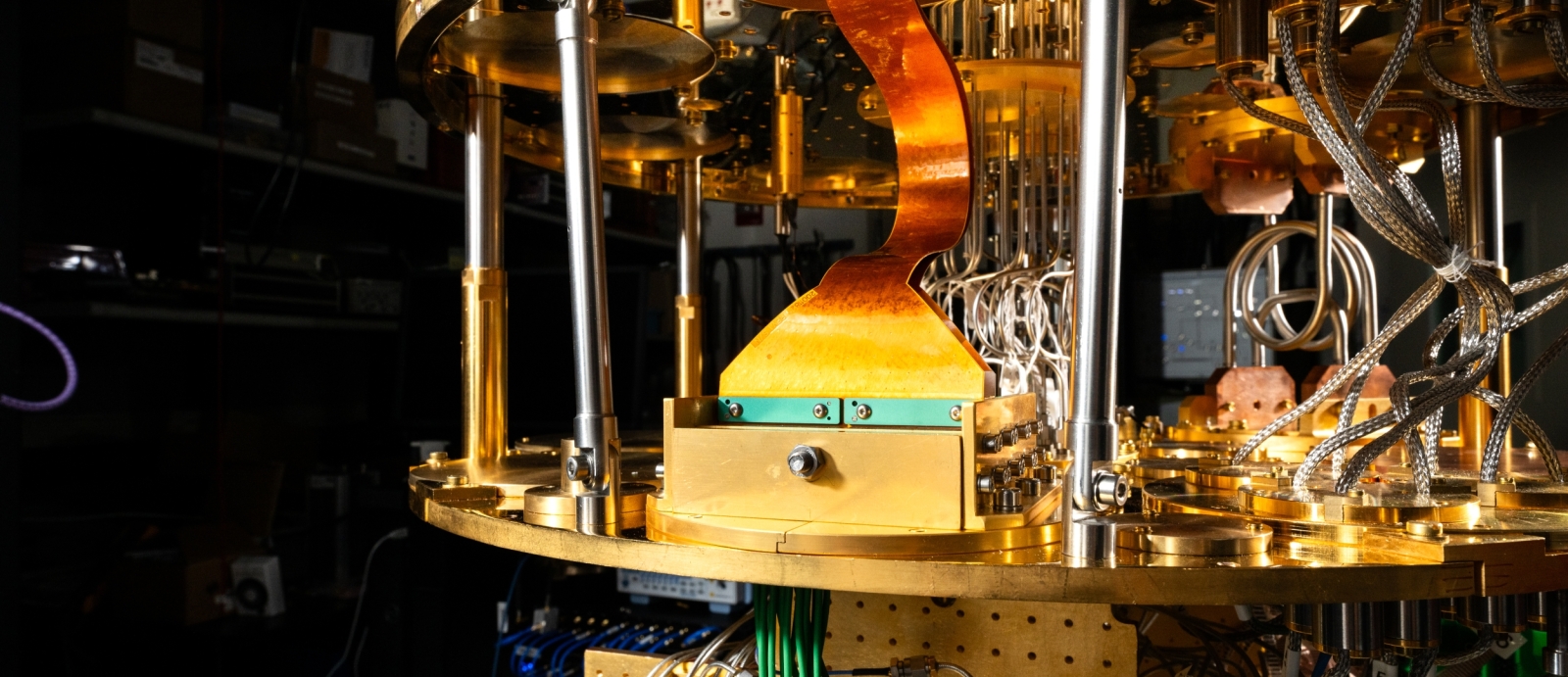
Flexible cryogenic cables solve a challenge in quantum system development
By harnessing the unique properties of quantum mechanics, scientists and engineers worldwide seek to enable systems with extraordinary capabilities. Many of them are working on the highly anticipated development of quantum computers capable of completing complex calculations at unprecedented speeds. These computers could meet the growing computational demands of both scientific research and data-intensive industries like finance, cybersecurity, and medicine.
Necessary for quantum system development is an environment in which the fragile nature of quantum bits (qubits) is stabilized and the thermal noise (fluctuations in current/voltage) inherent in superconducting electronics is dampened. That environment requires cryogenic temperatures, those ranging from 5 to 10 millikelvins, colder than the extreme temperatures encountered in space. Dilution refrigerators create this needed cryogenic condition.
Dilution refrigerators used for quantum R&D need a wiring system that can operate in cryogenic temperatures, maintain a power-efficient direct current, and support high-speed data transmission. Researchers at MIT Lincoln Laboratory prototyped flexible, ribbon-like, low-frequency (LF) cables that not only meet these demands but also are compatible with commercial circuit-board manufacturing processes. Maybell Quantum, a Colorado-based company supplying hardware for developing quantum systems, licensed the design for these cables and is adapting them for use in their dilution refrigerators.
"We’re planning to integrate Maybell LF CryoTrace, the ribbon wiring system transferred from MIT Lincoln Laboratory, across all thermal stages of our dilution refrigerators. Initially, the cables will be used for LF services, such as thermometry, heaters, and sensors, with feasibility studies planned for additional functions," says Lasse Nielsen, Strategy and Operations Lead at Maybell Quantum. "After qualification testing, LF CryoTrace is planned for the next iteration of our internal wiring across the Maybell product family."
Motivation for invention
To support government initiatives in quantum computing, the Lincoln Laboratory research team investigated alternatives to conventional coaxial cables for use in hardware like dilution refrigerators. Coaxial cables can generate heavy heat loads for cryogenic hardware to address. And, as the number of qubits in quantum computers will increase, so will the number of coaxial cables in the infrastructure, making it difficult to fit stiff, bulky cable arrays into hardware supporting superconducting qubits.
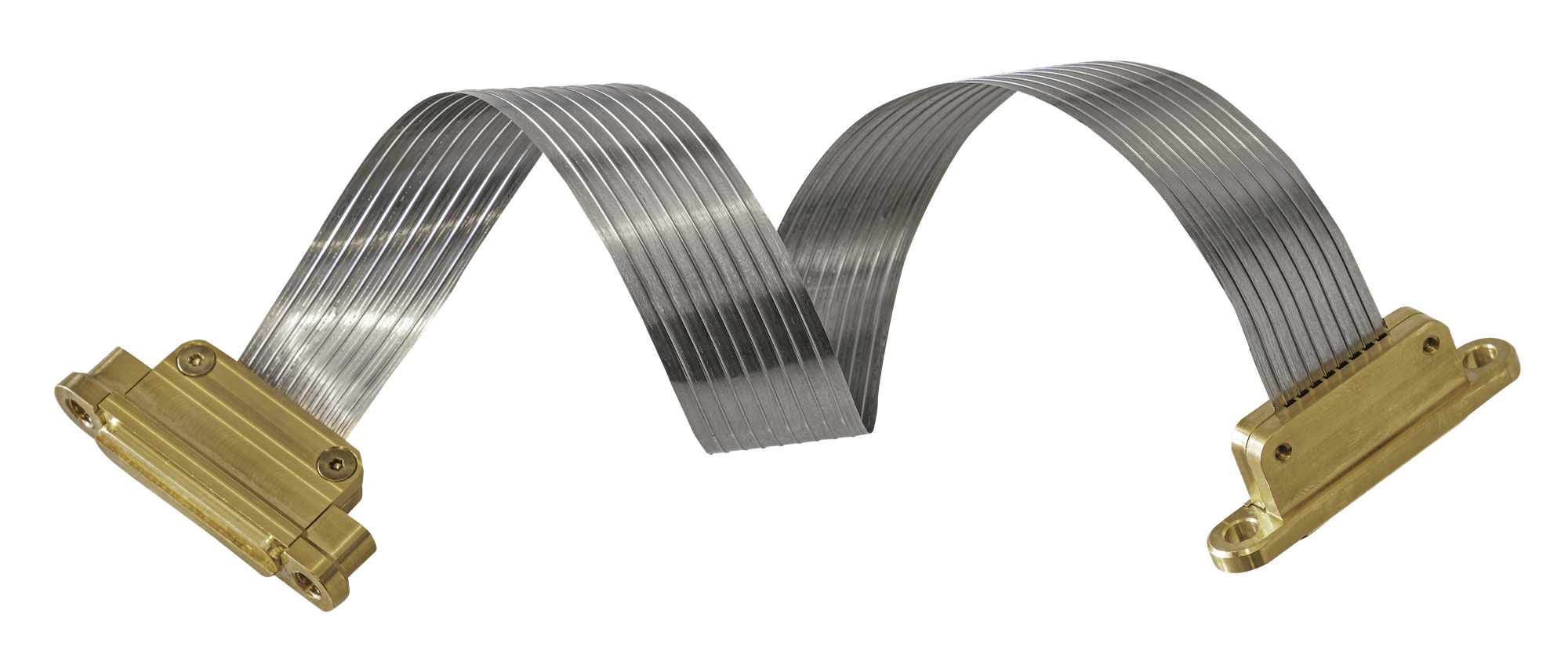
The team chose a stripline cable configuration with conductive layers positioned between flexible polymer layers that shield against electromagnetic interference (also known as crosstalk). Striplines offer consistency across different frequencies and minimal signal loss. The new cables were designed to accommodate large numbers of simultaneous signal transmissions; support direct-current operation without warming the cryogenic environment; and importantly provide easier integration into hardware than achievable with brittle coaxial cables.
"The main innovation is that the Laboratory's cables can be fabricated by a traditional printed-circuit-board manufacturer. They're cheaper to fabricate and easier to install than traditional coaxial cables," says John Cummings, a principal investigator in the flexible cables project of the Lincoln Laboratory Quantum-Enabled Computation Group.
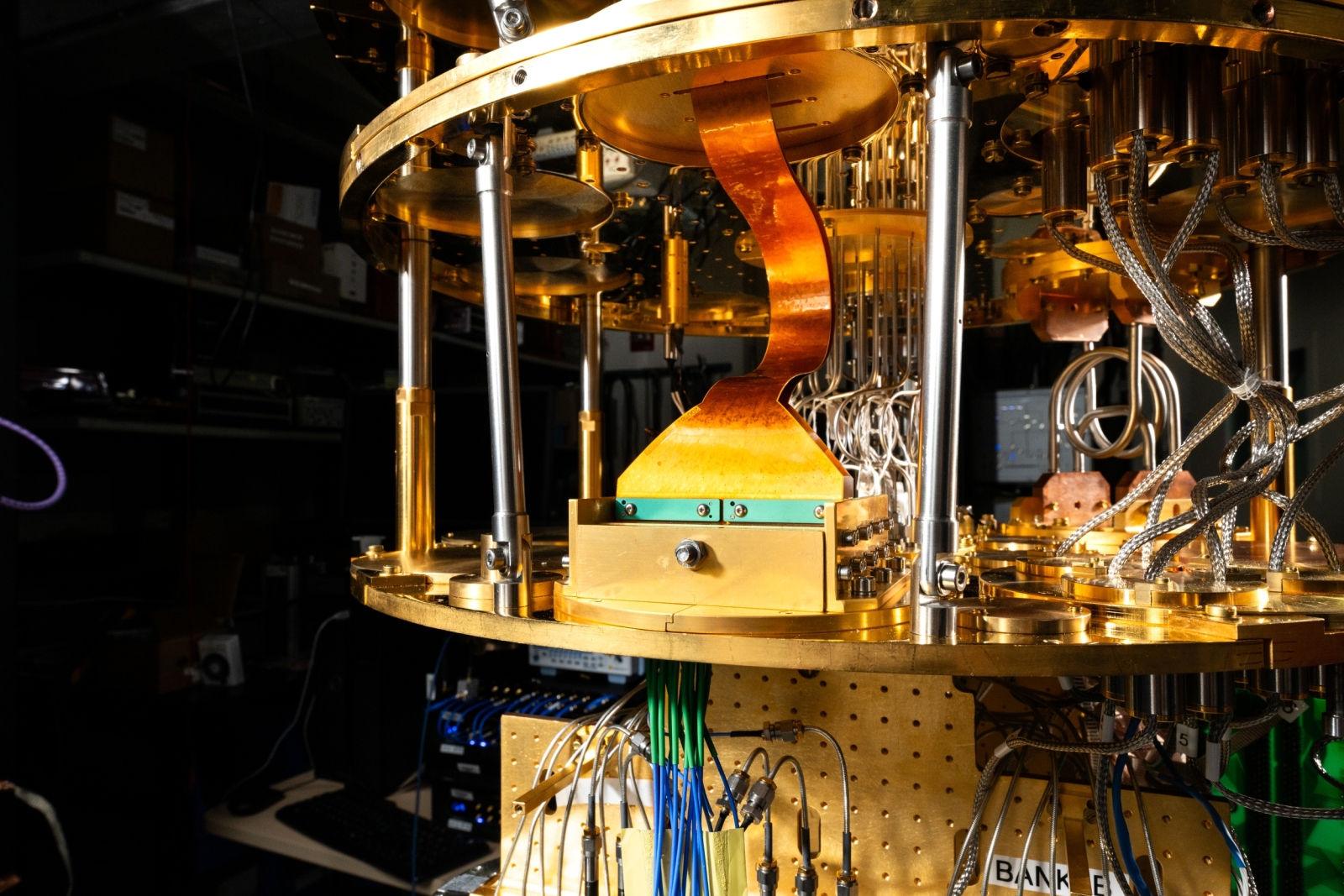
Citing ease of installation and durability as two factors making these cables attractive, Maybell Quantum says the ribbon format is mechanically robust, reducing handling-related breakages common with thin coaxials and improving repeatability in production. The supple flex cables allow assembly tasks that took days to complete to be done in a few hours.
"Over time, we think ribbonized, quantum-specific internal wiring can reshape manufacturing norms: faster and more consistent builds, easier field service, and more modular upgrades," Nielsen says.
Future outlook
Maybell Quantum is looking toward supporting quantum computing's transition from a laboratory-based capability to an industrial, commercially viable one. The huge gap between the current highly specialized quantum-laboratory environment and the robust infrastructure required for future industrial quantum computing lies in the hardware promoting the development of functional chips.
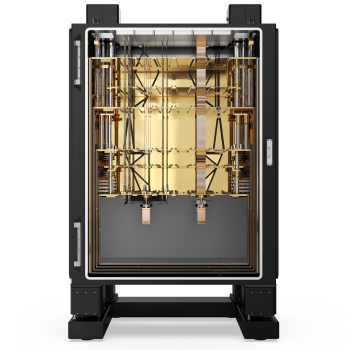
Maybell's mission is to develop reliable tools that commercial developers of quantum computers can use with ease and without the high costs and expert training associated with the equipment in today's quantum labs. The flex cables and Maybell's continued R&D into their capabilities and integration into various tools will foster a future infrastructure that could enable industry to scale manufacture of quantum computers to a level at which these powerful machines could cost-effectively find use in a myriad of enterprises.
"If you want to scale to hundreds of chips, you need interconnects that can handle more signals more reliably. That’s why the Lincoln Laboratory cables are so exciting for us — they enable true scalability,” says Kyle Thompson, founder and chief technology officer of Maybell Quantum. "We believe this technology will materially improve our systems and strengthen the broader U.S. quantum ecosystem by moving federally funded innovation into American manufacturing."