


Lincoln Laboratory develops aerial cargo delivery technology
Advanced Air Mobility — a sector of the aerospace industry composed of a collection of innovative technologies, including electric vertical takeoff and landing aircraft as well as uncrewed aircraft systems (UAS) for cargo delivery — is transforming the aviation transportation system. Recognizing this emerging transformation and the need for safe and efficient integration of automated aircraft into the National Airspace System, NASA sponsored the Autonomous Aerial Cargo Operations at Scale project, a University Leadership Initiative program.
The Laboratory is a partner organization in the project and is integrating technology provided by university partners (the University of Texas at Austin, MIT, Morgan State University, and Purdue University) with Laboratory systems to develop and evaluate technologies for autonomous cargo delivery. The systems developed at the Laboratory and utilized in this project include an airborne collision avoidance system for small UAS (ACAS sXu), a separation assurance agent that slows down or speeds up an aircraft before it encounters conflicting aircraft, and an exclusion zone concept that provides protected airspace around an aircraft descending to complete a delivery.
"The collision avoidance system has been worked on in the Laboratory since 2008," said Margarete Groll, an associate staff member in the Laboratory's Transportation Safety and Resilience Group. "We were the developers of the next-generation Airborne Collision Avoidance System (ACAS), ACAS X. Together with MITRE, we also developed the Traffic Alert and Collision Avoidance System (TCAS) technology that is used on aircraft today. The separation assurance logic was in development at the beginning stages of this program. The collision avoidance and separation assurance systems are largely sufficient to mitigate collision risk, but not a fully complete solution because there's another consideration, which is that you don't want an aircraft that's actively conducting a delivery to be forced to maneuver when they’re in a vulnerable energy state. That's why we've provided this protected airspace around them: the exclusion zone."
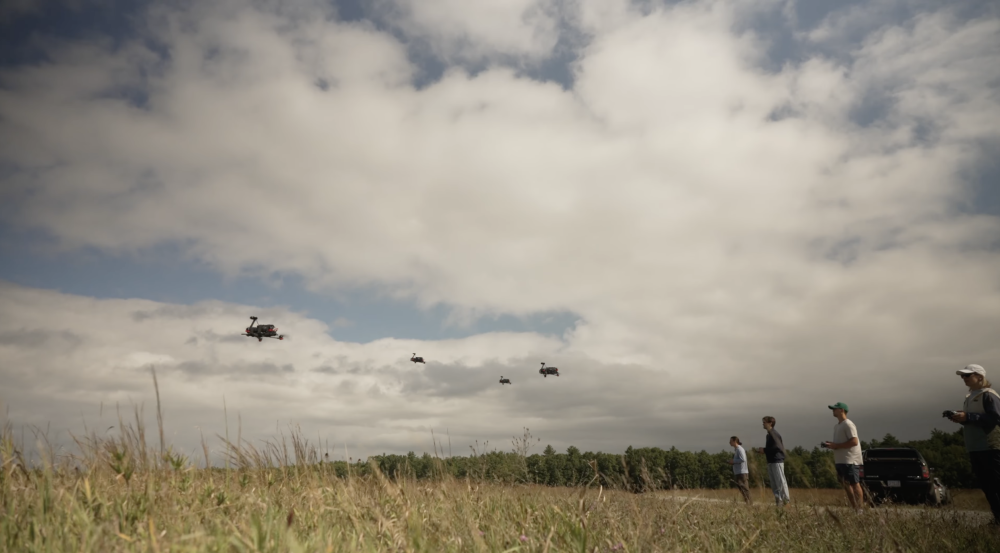
Since the Autonomous Aerial Cargo Operations at Scale project began in 2021, the Laboratory has provided progress updates to NASA in the form of annual technology demonstrations. Laboratory staff created a hybrid simulation environment for the first demonstration of the systems, and as the technology and hardware developed, they progressed to incorporating live aircraft together with simulated aircraft for the second demonstration. The third and final demonstration took place in August 2025 at the Turner Drop Zone in Fort Devens, Massachusetts, where Laboratory staff flew four small UAS, or drones, to test the three integrated systems.
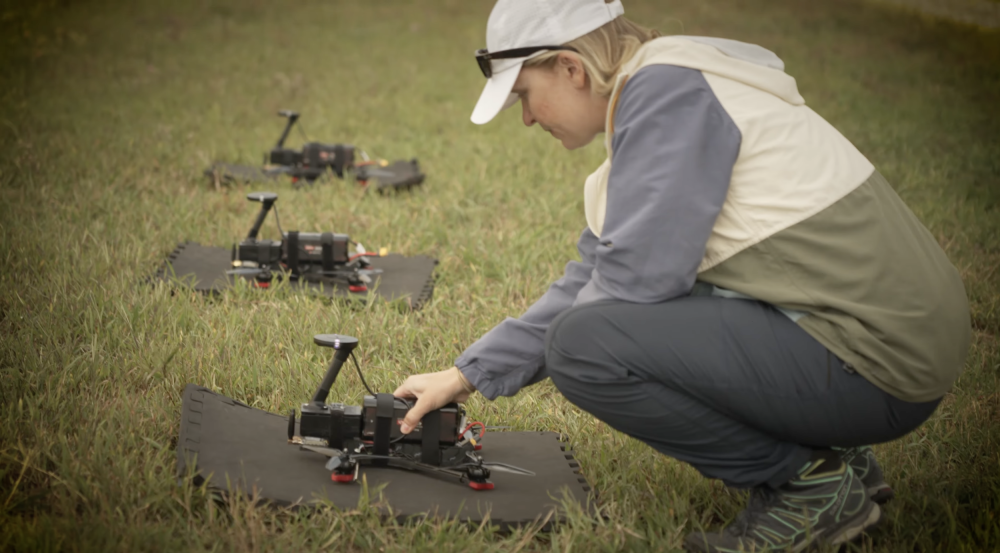
The August demonstration presented a future UAS traffic management (or UTM) system, which will provide automated protocols and services for drones as they plan their routes and fly, such as collision avoidance or a flight route generator to address noise impacts. UAS operators would be able to request information that may influence the flight route or aircraft systems, such as weather information from UAS service suppliers that provide supplemental data. Information would also be obtained from the UAS itself to inform deconfliction between other aircraft.
"Our demonstration represented a company providing these services to all the drones that are operating under its control," said Luis Alvarez, a technical staff member in the Transportation Safety and Resilience Group. "What we are testing is how each of the technologies that the group developed, which are services that a company could be providing, interact. We mimicked being a service provider to test that our infrastructure would work in a way that, for example, Amazon could use, or another company that Amazon contracts could use, to provide these services to the drones that they're operating."
Following the August demonstration, Laboratory staff traveled to Austin, Texas. At this point in the Autonomous Aerial Cargo Operations at Scale project, NASA is focused on gathering foundational research to inform their development goals for aerial cargo delivery. Laboratory staff met with NASA and the university partners to discuss their integration process, challenges encountered when operating the systems, and recommendations for future use of the technology.