


MIT Lincoln Laboratory hosts National Security Commission on Emerging Biotechnology
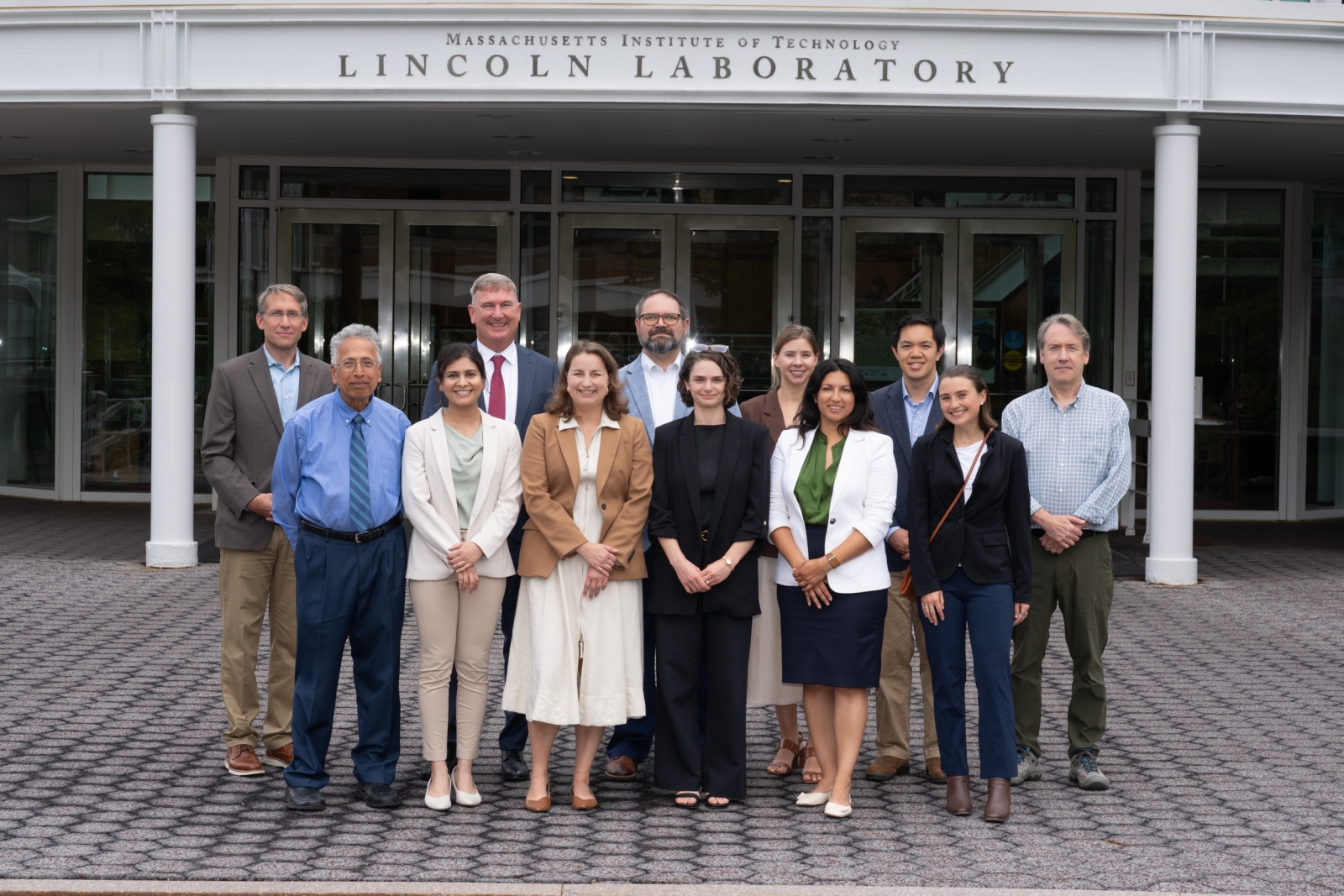
On September 3, MIT Lincoln Laboratory hosted the National Security Commission on Emerging Biotechnology (NSCEB) for a stop on its national roadshow. The event convened representatives of state organizations, defense centers, universities, technology companies, and business executives to discuss how Massachusetts' biotechnology ecosystem can strengthen national biodefense capabilities.
"We have a lot to leverage in this region to advance biotechnology," said Christina Rudzinski, assistant head of the Biotechnology and Human Systems Division at Lincoln Laboratory. "Many people are already working together to push the bioindustrial sector beyond biopharmaceuticals and into a broader ecosystem across industries. This synergy is where NSCEB comes in — connecting policy to the real-world work already happening, including here at Lincoln Laboratory and across the state."
Biotechnology touches many economic and defense sectors, from disease-resistant crops and life-saving medicines to biofuels and advanced manufacturing materials. In 2022, Congress established the NSCEB to study the national security implications of this rapidly advancing field and issue policy recommendations to ensure continued U.S. leadership.
In April 2025, the 11-member bipartisan and bicameral commission released its report, calling for a minimum of $15 billion in federal investment over five years. According to the report, China is investing aggressively to dominate the field, echoing a pattern the United States has seen before in sectors such as semiconductors.
"The coalition of stakeholders working in the Massachusetts biotech ecosystem illustrates how collaborative regional work will help keep the U.S. in the lead by producing exceptional innovation across all areas of biotechnology," said NSCEB Executive Director Caitlin Frazer.
Now in the final year of its three-year mandate, NSCEB is touring the country to see local biotechnology ecosystems in action. The commission will bring insights back to Washington D.C. to help members of Congress support their regions' strengths.
Advancing Massachusetts as a defense-biotechnology hub
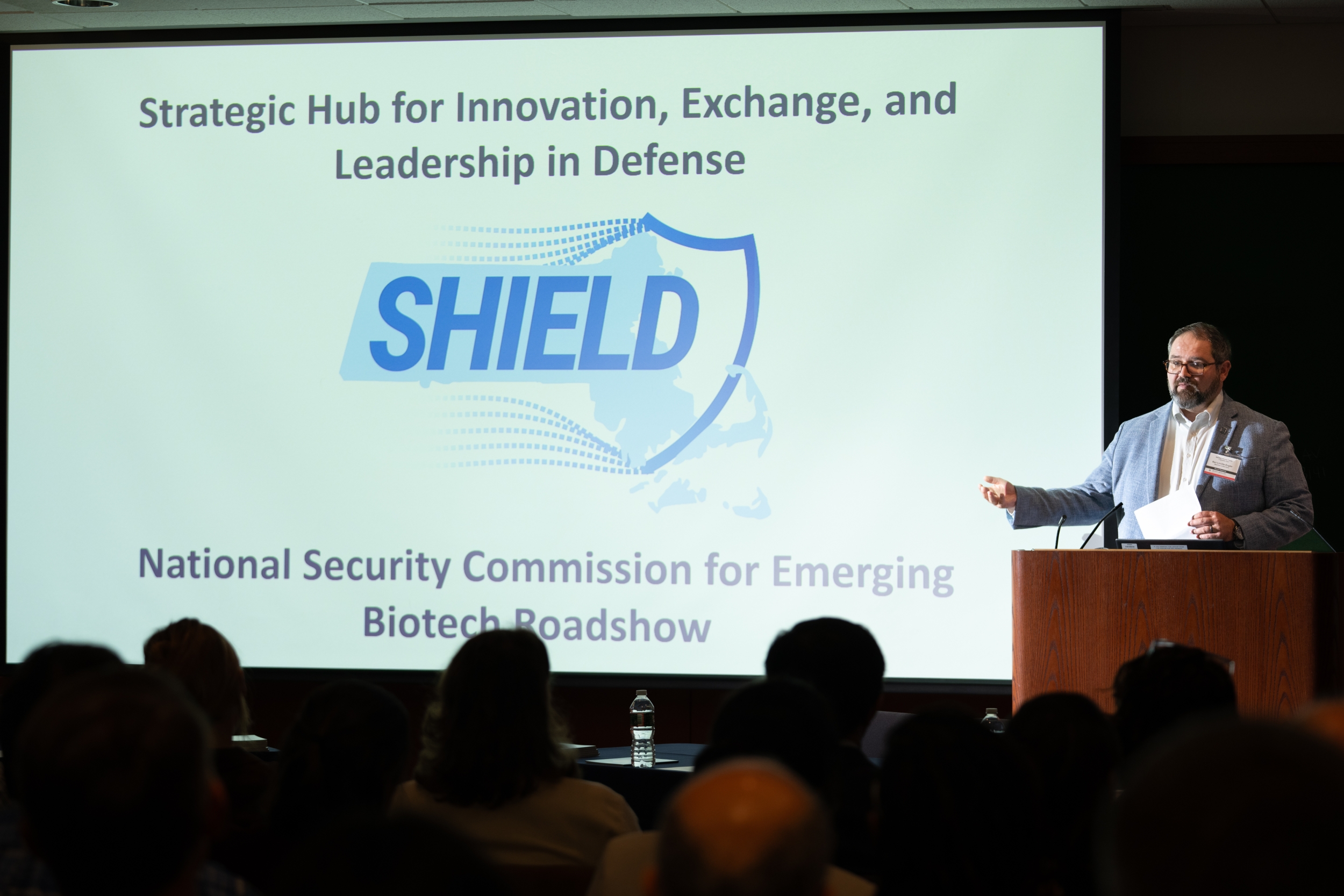
Massachusetts has identified biotechnology as a priority technology area under its Strategic Hub for Innovation, Exchange, and Leadership in Defense (SHIELD) initiative. Launched by Governor Maura Healey in October 2025 alongside $47 million of initial aligned investment, the initiative has moved with speed and at scale. This includes standing up the BioNexus program that leverages state matching funds to develop biotechnology and biomanufacturing solutions for the U.S. Army Combat Capabilities Development Command (DEVCOM). To take the momentum of SHIELD further, Governor Healey included a $100 million authorization for defense sector capital projects in the Mass Wins Act, an economic development bill filed in April. The bill is currently being considered by the state legislature.
During the roadshow event, Ben Linville-Engler, who co-chairs the SHIELD Working Group and serves as deputy director of the Massachusetts Technology Collaborative, led a panel discussion with representatives from the Massachusetts Life Sciences Center, Business Executives for National Security, Activate, DEVCOM Soldier Center, MassChallenge, Perimeter, Center for Advanced Manufacturing, and the Massachusetts AI Hub. They are among more than 40 partner organizations participating in SHIELD.
"There is incredible convergence between economic development and national security in all domains — land, air, sea, space, cyber, and bio," said Linville-Engler, citing the state's $48.6 billion in defense-sector economic contributions last year. "Massachusetts is committed to biotechnology and national security, and not just in Boston and Cambridge but across the entire state."
In July, the SHIELD Working Group submitted a report outlining steps to speed the transition of technology into deployable capabilities, strengthen the defense workforce pipeline, and reinforce the state's national security industrial base.
Lincoln Laboratory is well positioned to support these priorities. As a Department of War federally funded R&D center, the Laboratory has deep knowledge of national security needs and sustained ties to academic, commercial, and U.S. government laboratories. "These attributes can help strengthen biotechnology collaborations and integrate and transition solutions across Massachusetts and New England," Rudzinski said.
Scaling up biomanufacturing
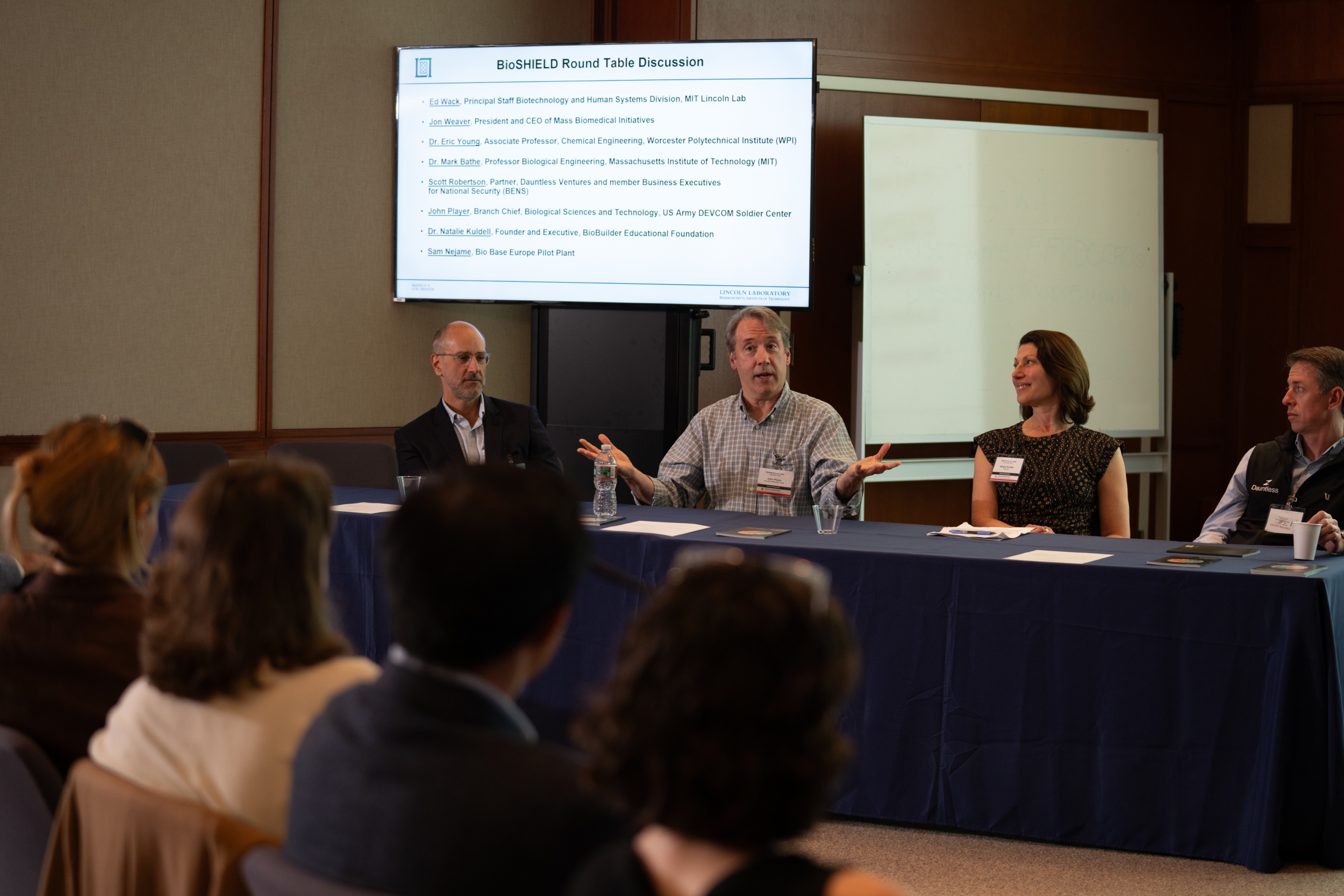
One project advancing this vision is the Biotechnology Scale-up Hub for Innovation, Economic Development, Labor Training, and Defense (BioSHIELD). Planned for Worcester, Massachusetts, this 200,000-square-foot biomanufacturing facility is designed to mobilize the region's defense-biotechnology sector.
"BioSHIELD's mission is to accelerate breakthrough biomanufacturing solutions that strengthen national resilience, support commercial innovation, and grow the regional economy," said Edward Wack, project co-lead and principal staff in the Laboratory's Biotechnology and Human Systems Division. "It will bring together industry, academia, and government to transform ideas into scalable biological products, supporting a secure and competitive bioindustrial future."
The project responds to NSCEB's call for a national network of biomanufacturing scale-up facilities, a capacity currently missing in New England, according to Wack. The facility will offer shared equipment, infrastructure, and secure laboratory space to help bridge the "valley of death" between early-stage discovery and commercial- or defense-scale production. BioSHIELD's ready-built support networks will be key to overcoming technological and regulatory hurdles, helping innovators rapidly move capabilities to market or military use.
A coalition supporting the project includes Massachusetts Biomedical Initiatives, Worcester Polytechnic Institute, Bio Base Europe Pilot Plant, and Lincoln Laboratory. It builds on a foundational effort in central Massachusetts funding the Massachusetts TechHubs program. At the event, Wack announced the coalition has signed a memorandum of understanding to formalize the partnership. Design workshops are scheduled to begin soon, ahead of funding and construction.
Connecting AI and biotechnology
Other discussions centered on the intersection of biotechnology and AI, another critical area for national security. Panelists represented Boston University, UMass Boston, Massachusetts Life Sciences Center, Parker Institute for Cancer Immunotherapy, Wyss Institute, and Phicil-itate Change. They discussed challenges in collecting and disseminating high-quality, AI-ready datasets and opportunities for AI to improve biomanufacturing and therapeutics.
Closing the event, Wack called for continued collaboration as the nation moves at speed and scale to stay at the forefront of biotechnology.
"At Lincoln Laboratory, we've built a strong foundation in biotechnology for more than 25 years, and it's heartening to see this level of coordinated work taking shape. It resonates with so many of us who view biotechnology as both an economic and national security imperative," Wack said.