


Evaluating Brain Function with Virtual Reality
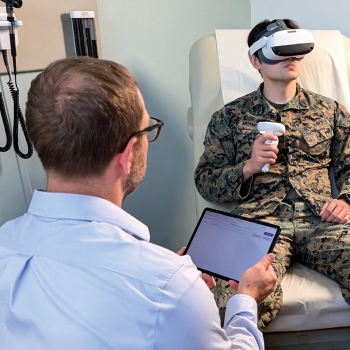
Researchers from MIT Lincoln Laboratory, MIT Department of Mechanical Engineering, and Walter Reed National Military Medical Center developed a system that uses virtual reality in gauging a person’s neurological status. The innovative system, called MINDSCAPE (for Mobile Interface for Neurological Diagnostic Situational Cognitive Assessment and Psychological Evaluation), integrates data from several sensing modes to create an assessment of a person’s psychological and neurological wellness. This portable tool will allow neurological screening in a field hospital or clinic, providing rapid identification of potential debilities.
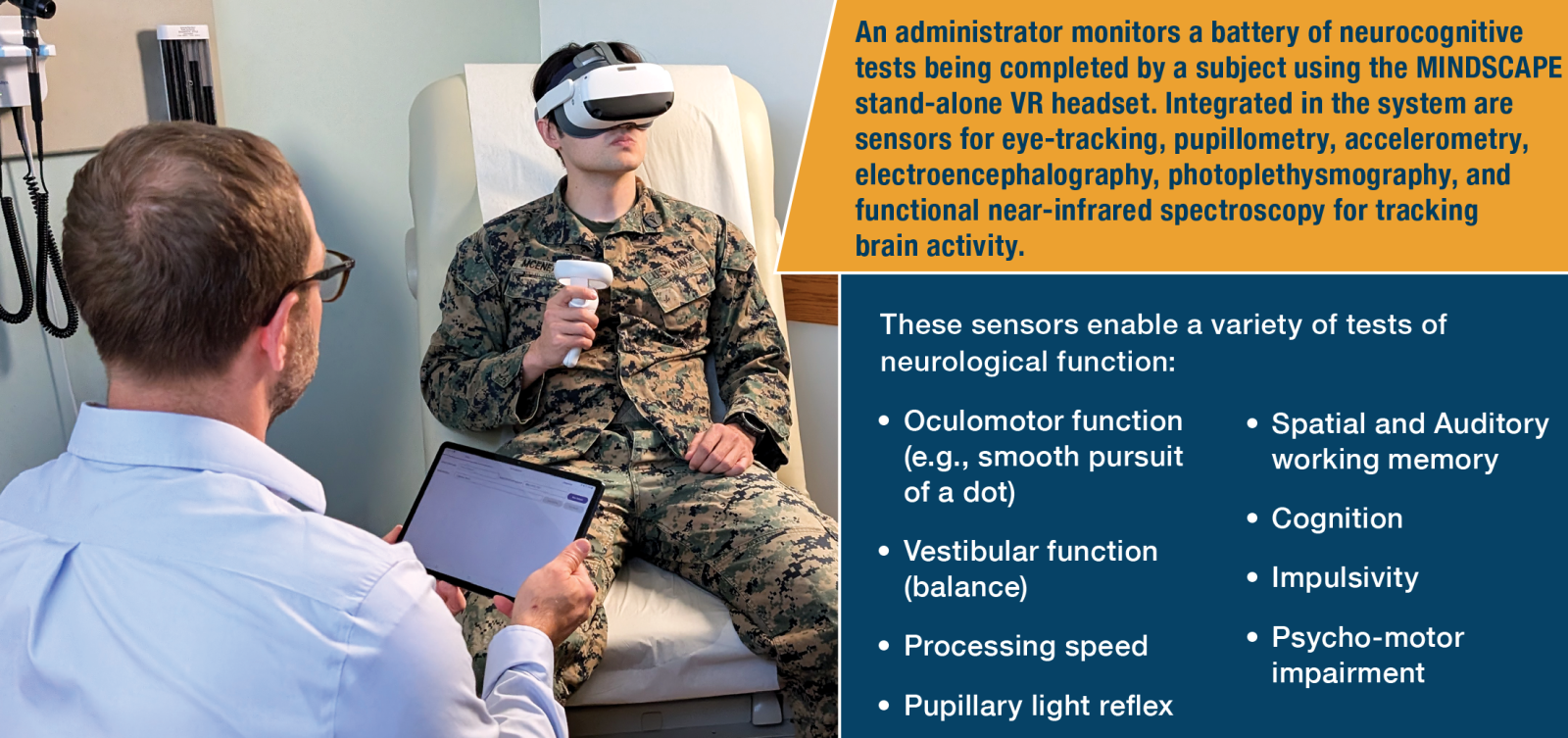
An administrator monitors a battery of neurocognitive tests being completed by a subject using the MINDSCAPE stand-alone VR headset. Integrated in the system are sensors for eye-tracking, pupillometry, accelerometry, electroencephalography, photoplethysmography, and functional near-infrared spectroscopy for tracking brain activity.
Motivation
Individuals like servicemembers, first responders, and air traffic controllers who provide services to assure the safety and even the lives of others must be able to respond quickly and effectively to challenging and changing situations. Carrying out these vital missions requires excellent cognitive alertness and psychological health. Timely monitoring of the cognitive soundness of service providers is of major concern to military and civilian agencies responsible for mission management.
Innovation and Potential Impact
The MINDSCAPE prototype employs virtual reality (VR) and a multimodal sensing approach to evaluating a person’s potential brain injury. A subject puts on a commercial headband containing sensors for electroencephalography (EEG, to measure electrical activity in the brain) and photoplethysmography (PPG, to measure volume changes in small blood vessels). Then the subject dons a VR headset containing an eye-tracking monitor, accelerometer, and microphone. The subject is presented with several tasks commonly used by neurologists as tests for identifying declines in brain function, such as eye-tracking of a moving dot or recalling a visual or auditory pattern. The system evaluates the subject’s physiological and cognitive responses during the test to predict a potential brain injury.
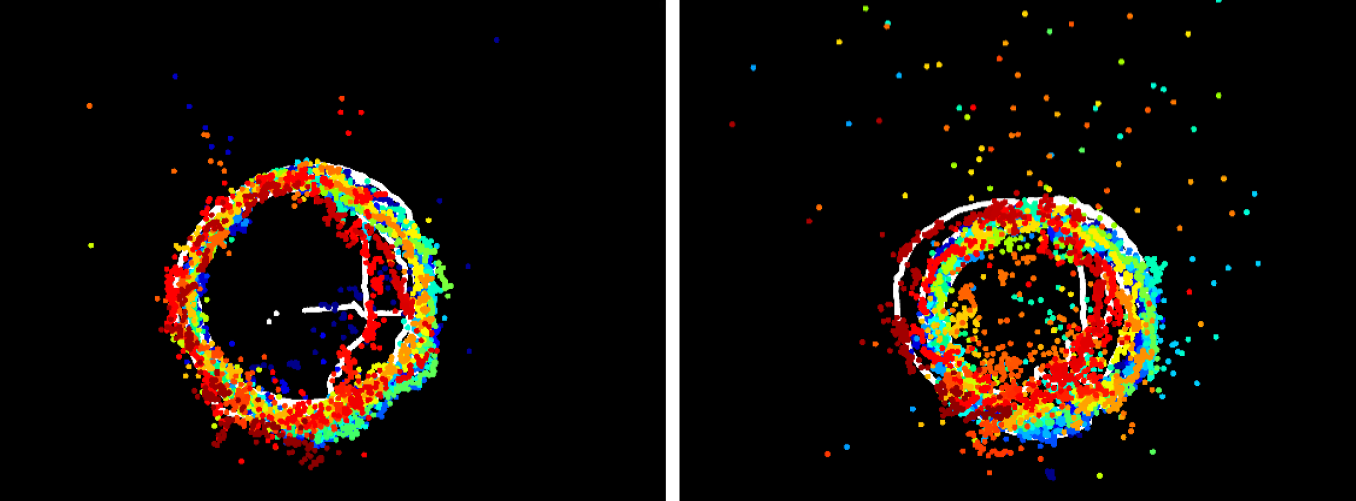
MINDSCAPE offers several unique features, including
• Portability
• Sensor integration
• Elimination of distractions from test environment
Imagine the benefit if in 15 minutes at a field site, a portable unit could evaluate a servicemember for a brain injury instead of waiting to transport that patient to a hospital that may be miles away.
The multimodal MINDSCAPE concept offers possibilities for various neurological examinations. The range of tests could be expanded by loading software in the VR for assessing targeted capabilities or by adding sensors for monitoring physical biomarkers indicative of various neurodegenerative conditions. The MINDSCAPE prototype has undergone testing at the Walter Reed National Military Center.
Benefits
- Usable as a standalone system or in conjunction with an Android tablet for administration by a clinician
- Broadly configurable for a variety of sensor types and neurocognitive tests
- Capable of highly sensitive and uniquely specific measurements because of its multiple modes of physiological monitoring