


Dave Whelihan delivers MIT Museum talk on Arctic technology engineering

How does cutting-edge technology survive and thrive in the Arctic, one of Earth's most extreme environments? Researcher Dave Whelihan of the Advanced Undersea Systems and Technology Group at MIT Lincoln Laboratory explored this question during the After Dark: COLD event at the MIT Museum on September 10. The After Dark series turns the museum into an adults-only, after-hours venue featuring themed science talks and interactive demonstrations, full gallery access, live entertainment, and refreshments.
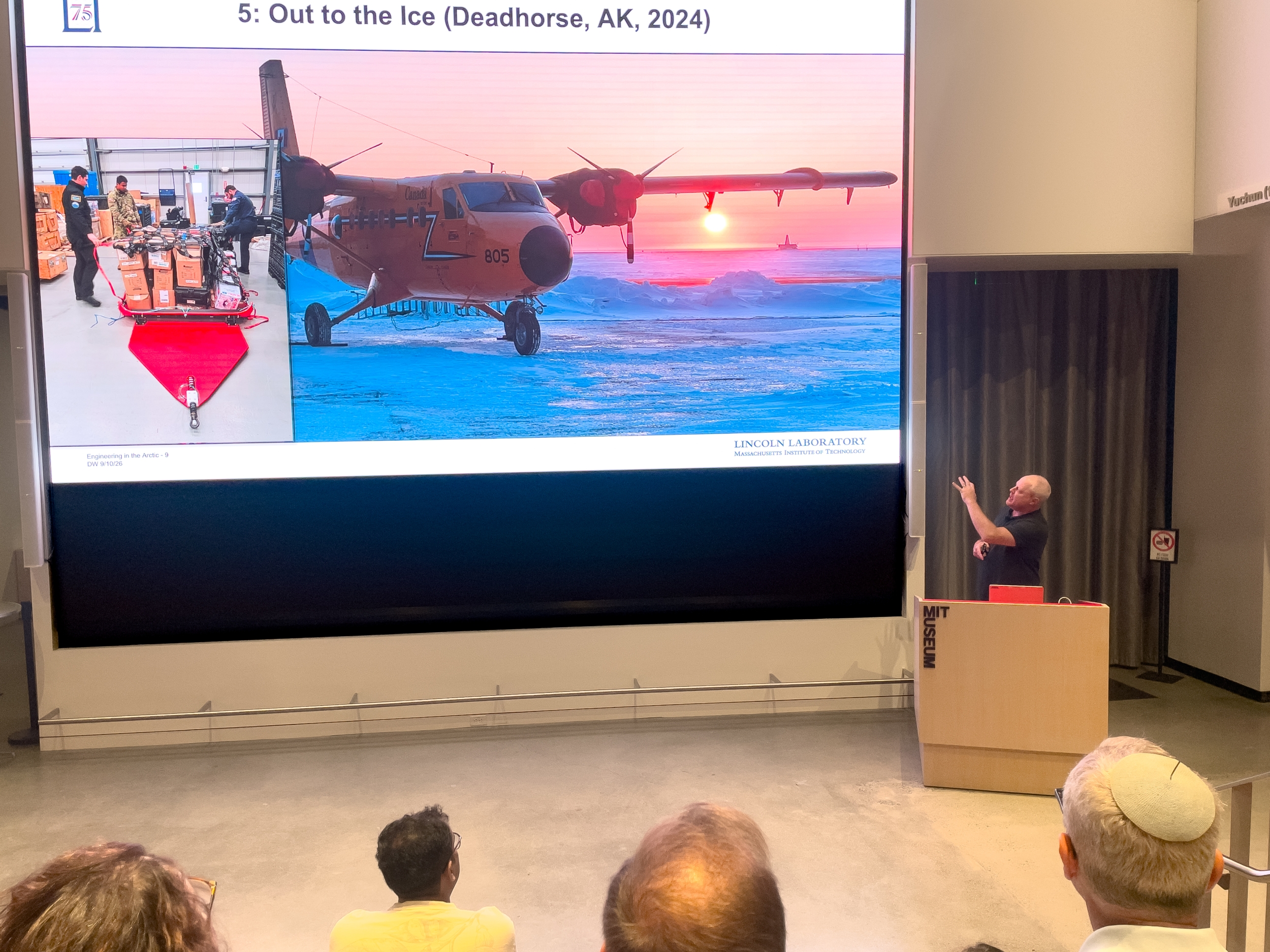
Through the U.S. Navy's Operation Ice Camp (OIC), Whelihan and fellow group members have been trekking to the Arctic since 2022 to test sensors for monitoring sea-ice breakup. In his talk, Whelihan explained how technologies must be ruggedized during transport, deployment, and operation to withstand harsh weather conditions like temperatures plunging to minus 25 degrees Fahrenheit and winds blowing at 30 miles per hour (mph) with 40 mph gusts. On their most recent trip, the team brought a prototype through-ice magnetic communications modem from an industry partner. To protect the part of the modem that sits atop the ice, Whelihan 3D-printed a round container made of rigid plastic to provide structural integrity and wrapped flexible plastic around the base of the container to handle mechanical stresses without cracking.
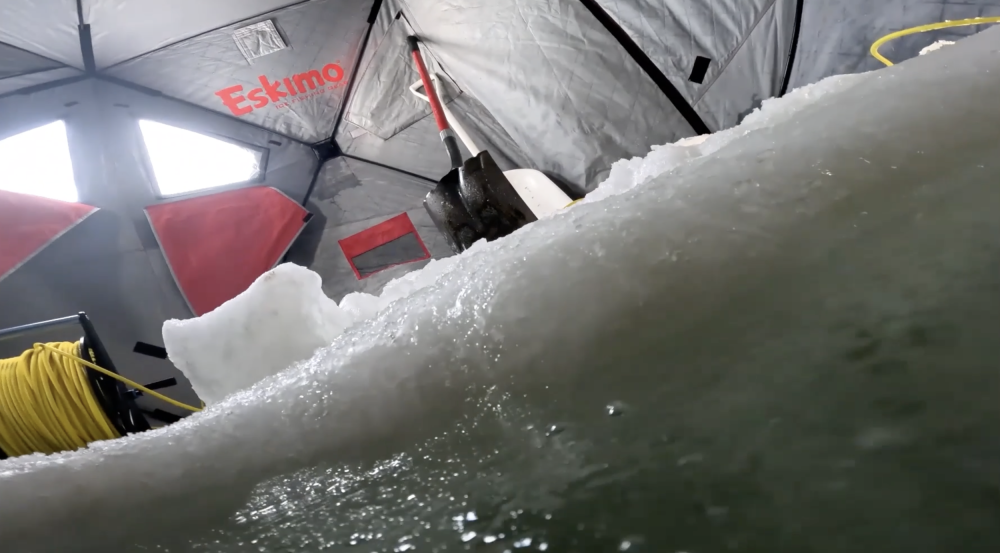
Whelihan will continue the conversation about Arctic sea-ice monitoring on January 16, 2027 at the MIT Museum through "Sea Ice: The Frozen Upside-Down," a 90-minute interactive program for the OCEANS thematic season. Whelihan and co-presenters will recount their experiences testing in cold maritime environments from the Arctic to the Antarctic, and audience members will play a board game simulating what conducting R&D on the ice is like.
"Sharing my group's research with the public brings awareness to a scientifically and strategically relevant region and takes me back to the initial excitement — and terror — of going out onto the ice for the first time," says Whelihan, who plans to return to the Arctic for a fourth time during OIC 2028.
Inquiries: contact Ariana Gaines.
Related Links
- Researchers tune into Arctic under-ice sounds and test through-ice communication
- Q&A with David Whelihan on the challenges of operating in the Arctic
- Researchers return to Arctic to test integrated sensor nodes
- Home ice advantage: GLRC hosts MIT engineers on Huron Bay for ice fracturing research
- Cracking the case of Arctic sea ice breakup
- Navy supports scientific research at ICEX 2022