


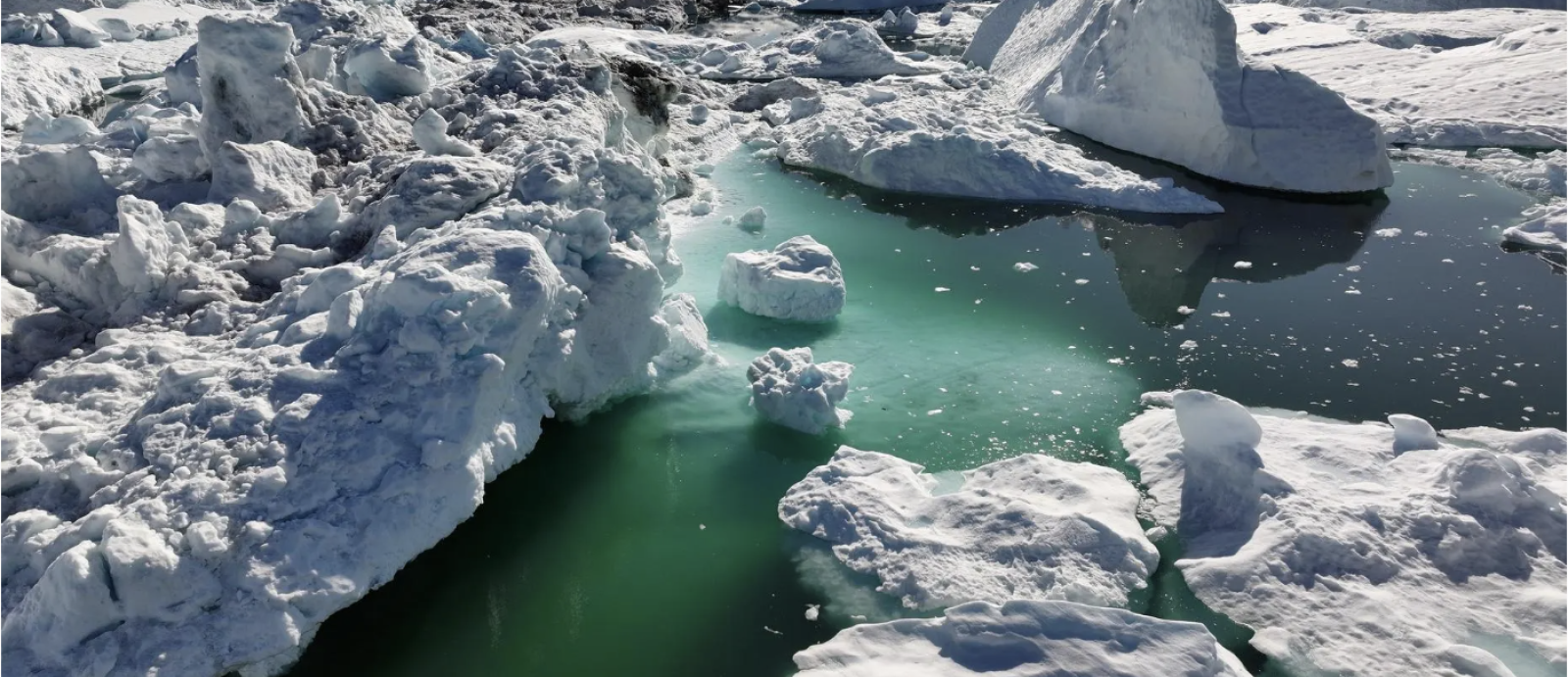
MIT Lincoln Lab contributes to Arctic research
For a few years now, individuals from the MIT Lincoln Lab have been going north to the Arctic in the winter every two years (coinciding with the U.S. Navy's Operation Ice Camp).
Most recently, a team returned from a trip this past spring, reporting on their efforts to continue various kinds of research, some aimed at the condition of Arctic ice shelf areas, including projects using low-cost sensors to see what is happening in this hard-to-access part of the world.
I liked how Ariana Gaines wrote about this on the Lincoln Lab's web site just a couple of weeks ago:
"Beneath the Arctic Ocean is an orchestra featuring natural and human composers, from cracking sea ice and whistling beluga whales to humming shipping-vessel engines," Gaines wrote. “Researchers from MIT Lincoln Laboratory saw some of this cacophony when analyzing data from commercial off-the-shelf sensors that they integrated and deployed in 2024 during the U.S. Navy's Operation Ice Camp (OIC). This past March, during OIC 2026, the researchers returned to the Arctic with a higher-fidelity version of one of the sensors, a geophone, which detects vibrations in the sea ice."
Listening to the ice
Gaines documents how "acoustic signatures" from cracking ice help with surveillance, including keeping tabs on any international activity by countries classified by the U.S. as "adversaries."
Here's how David Whelihan, one of the key people involved, explained this in an interview in 2025:
"Spanning approximately 5.5 million square miles, the Arctic is huge, and one of its salient features is that the ice covering much of the Arctic Ocean is decreasing in volume with every passing year," Whelihan said. "Melting ice opens up previously impassable areas, resulting in increasing interest from potential adversaries and allies alike for activities such as military operations, commercial shipping, and natural resource extraction. Through Alaska, the United States has approximately 1,060 miles of Arctic coastline that is becoming much more accessible because of reduced ice cover. So, U.S. operation in the Arctic is a matter of national security."