


Three Lincoln Laboratory technologies receive 2026 R&D 100 Awards
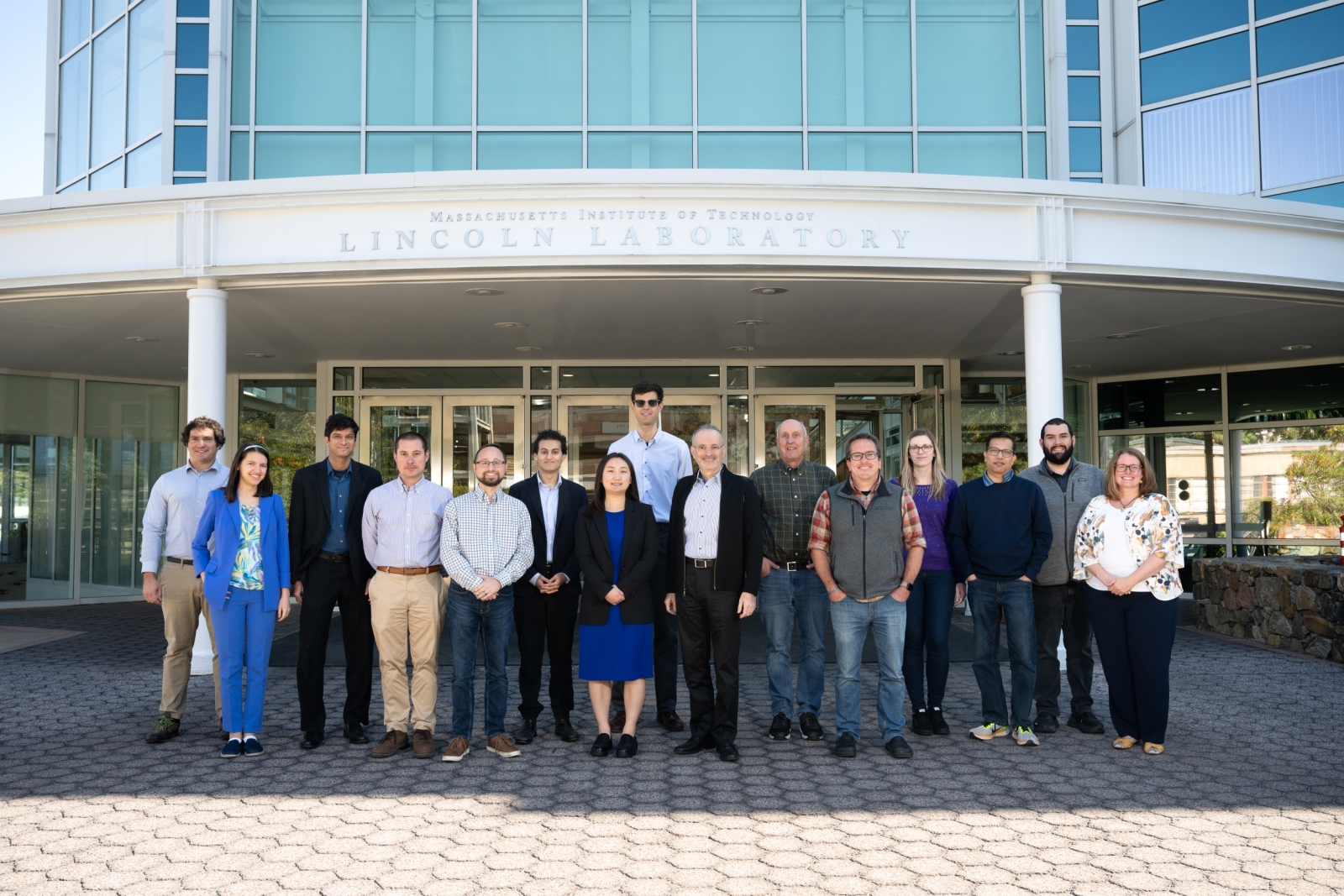
Three technologies developed by MIT Lincoln Laboratory are among recipients of 2026 R&D 100 Awards. The awards recognize the 100 most significant innovations that have transitioned to use or been made available for license in the past year.
R&D World, an online publication, manages the awards program, which has run annually since 1963. The worldwide competition is judged by an independent panel of science and technology experts and industry professionals.
The Laboratory's winners overcome obstacles to improving the security and capability of systems. One technology is an operating system designed to protect embedded computers from cyberattacks. Another technology is a platform for integrating superconductor and semiconductor chips in a wafer-scale system for quantum or high-performance computing. The final winner is an algorithm that removes interference 5G base stations incur on co-channel RF devices.
"These awarded technologies address critical problems in cybersecurity, quantum computing, and communications. We're proud of our dedicated staff who developed and transitioned these technologies for the nation's advantage," says Melissa Choi, Lincoln Laboratory director.
Since 2010, Lincoln Laboratory has received 111 R&D 100 Awards recognizing the transfer of its unclassified technologies to industry and government. Each year, many technology transitions also occur for classified projects. This transfer of technology is central to the Laboratory's role as a DoW federally funded research and development center.
Secure-by-design operating system
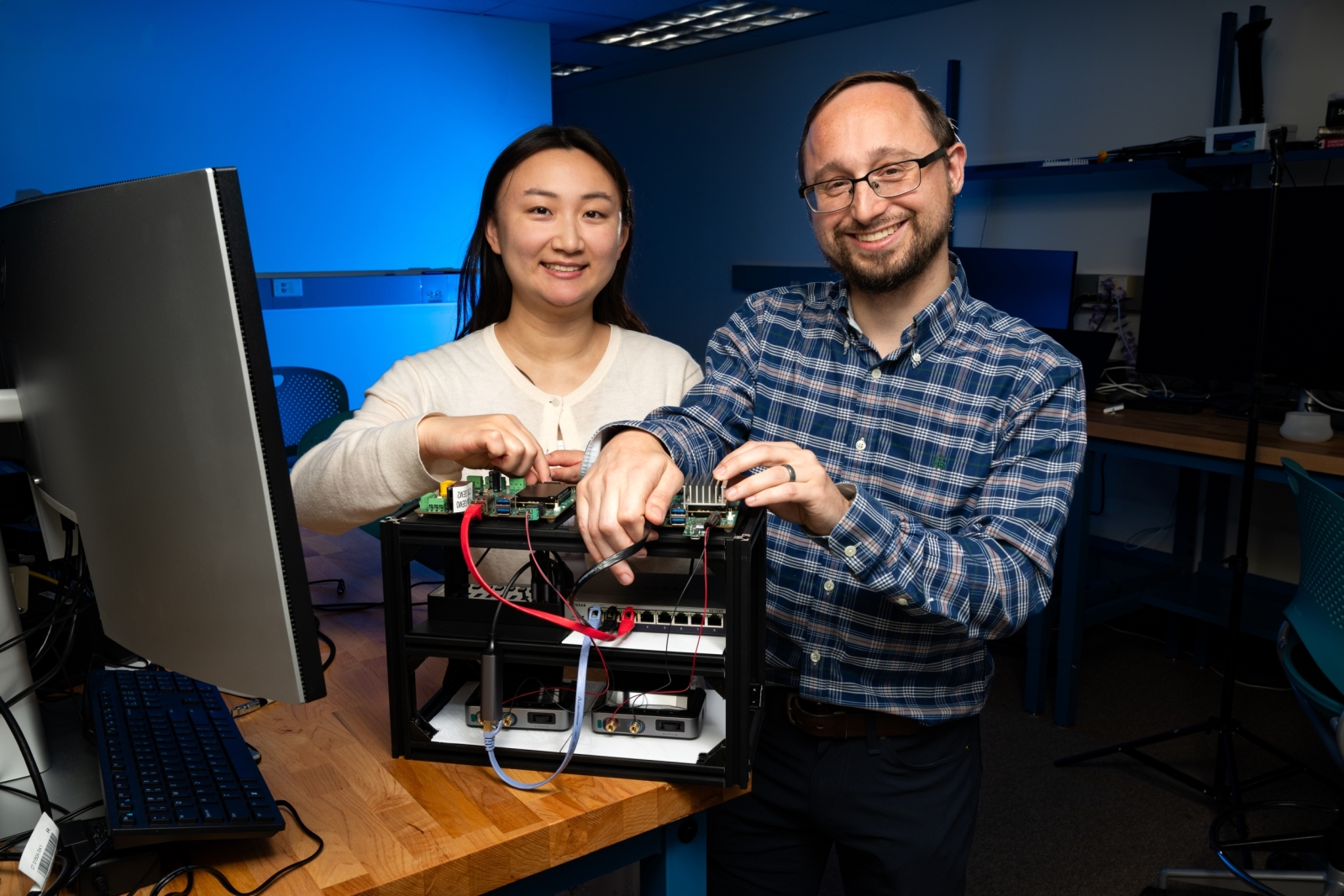
Computers embedded in deployed systems — such as satellites, drones, or radars — keep missions intact and people safe. The operating systems (OS) inside these embedded computers, however, are prime targets for cyberattacks. They are large, complex, and built on decades of legacy designs predating modern cyber threats. Increasingly, AI is helping adversaries exploit OS vulnerabilities.
To protect embedded systems, Lincoln Laboratory developed an inherently more secure OS called Magnetite. "If Windows and Linux are the familiar workhorses of general-purpose computing, Magnetite is built for the different realities of embedded systems, for which real-time performance matters, resources are tight, and system failure has physical consequences," says Juliana Furgala, principal investigator in the Secure Resilient Systems and Technology Group.
A few components assure Magnetite's security. It is built on top of seL4, a formally verified microkernel (i.e., software core). Formal verification means that mathematical proofs have guaranteed the microkernel's code behaves exactly as intended, eliminating a source of security flaws. On top of this foundation, Magnetite’s OS services — such networking, storage, and communication — are written in Rust. This programming language prevents common memory-corruption bugs that hackers often exploit. Finally, Magnetite configures its services as isolated processes under the principle of "least privilege." This configuration prevents different parts of an embedded system from accessing unnecessary data. If a cyberattack compromises one service, that component can be locked down while critical functions of the system continue running.
Free for government use and approved partners, Magnetite is now being integrated into space and flight platforms for the Department of War (DoW). Looking ahead, the team sees potential to extend the platform to other embedded domains, such as control systems for critical infrastructure. Because Magnetite offers a common, reusable foundation for building specialized mission capabilities, the team is also collaborating with other technical groups across the Laboratory to offer Magnetite as an alternative to costly, proprietary operating systems currently in use.
In addition to earning an R&D 100 Award, Magnetite was selected as MIT Lincoln Laboratory's Best Invention of 2025.
Wafer-scale platform for quantum systems
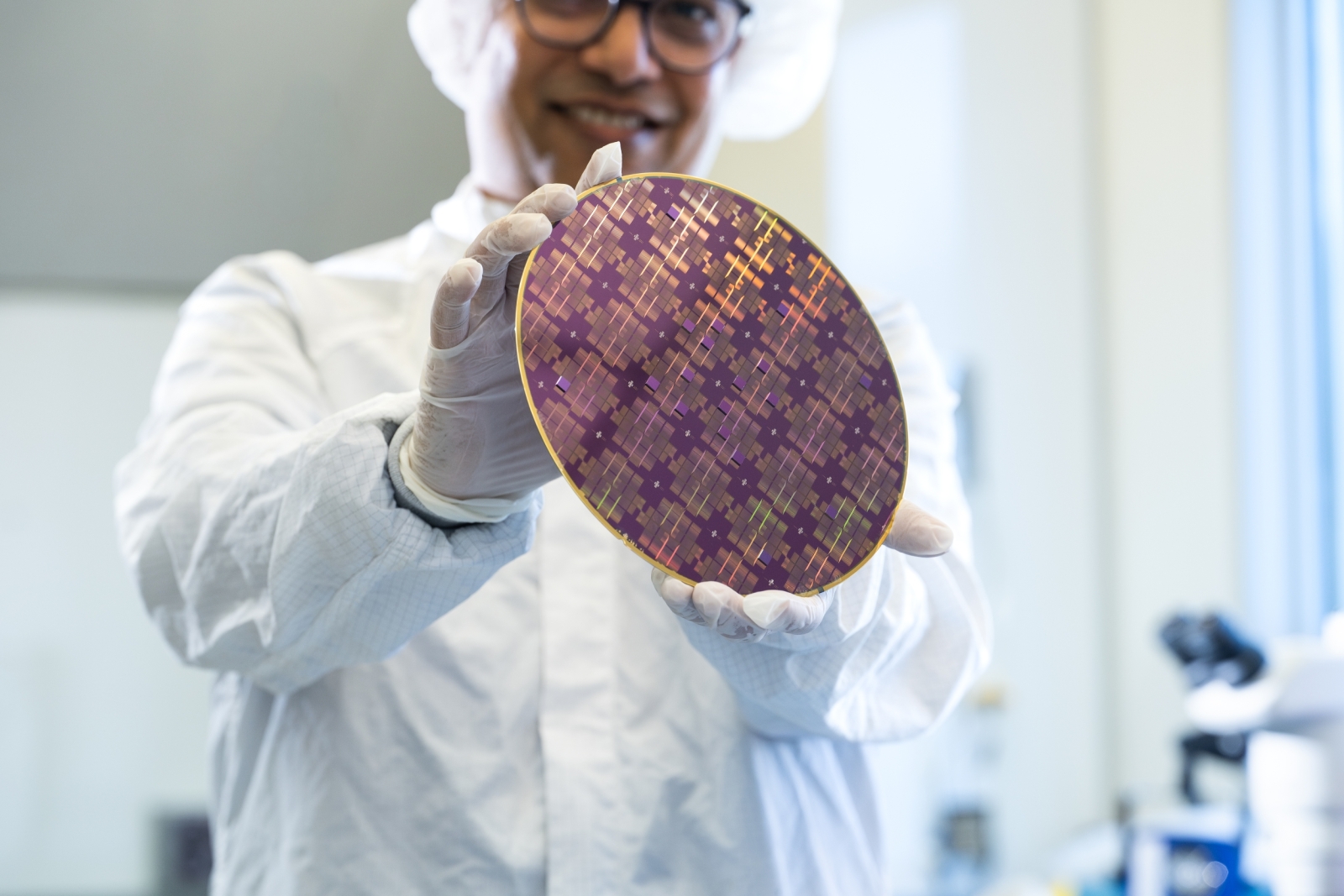
Modern computing systems are increasingly limited not by transistor performance but by interconnection bottlenecks. Electrical pathways linking densely packed chips are taking up space, slowing data transfer, and generating heat. The problem is especially pronounced in quantum systems, which require bulky coaxial cables to bridge superconducting chips (which must be cryogenically cooled to achieve zero electrical resistance) with room-temperature control electronics.
The Quantum Microsystems platform addresses this interconnection challenge, integrating hundreds of superconductor and semiconductor chips into a single, wafer-scale system. The platform combines several innovations. First, an AI decision-tree approach determines the optimal way to route connections between chips across a wafer. After the wafer is tested for defects, a digital lithography process "draws" custom wiring layers between chip locations and around defective circuit components to enable the highest yield possible from the wafer. Chips are then connected using microbump (tiny "bumps" of conductive material used to connect stacked chips) or bumpless techniques that place them extremely close together; a superconducting fabric extends these connections across the wafer to create a unified computing platform, carrying signals at near light speed. Coaxial cables are replaced with integrated, lithographically defined flexible interconnects, significantly reducing cryogenic wiring overhead and system complexity.
The Quantum Microsystems platform is designed to be reworkable, so chiplets can be replaced or upgraded without rebuilding the entire system. The platform enables the design and fabrication of systems ranging from individual and stitched‑reticle architectures to mix‑and‑match multireticle configurations and fully integrated wafer‑scale platforms. The platform's AI engine continuously adapts to process variations and design changes to enable efficient, data-driven microsystem manufacturing.
"By shifting from chip-level scaling to AI-optimized system-level integration, the platform establishes a new paradigm for building ultra-efficient, large-scale computing infrastructure for applications in quantum computing, AI, and high-performance computing," says Rabindra Das, principal investigator in the Quantum-Enabled Computation Group. The technology is designed for transition to government and commercial foundries and may be available for licensing and collaborative development through Lincoln Laboratory’s technology transfer process.
Algorithm to cancel 5G interference
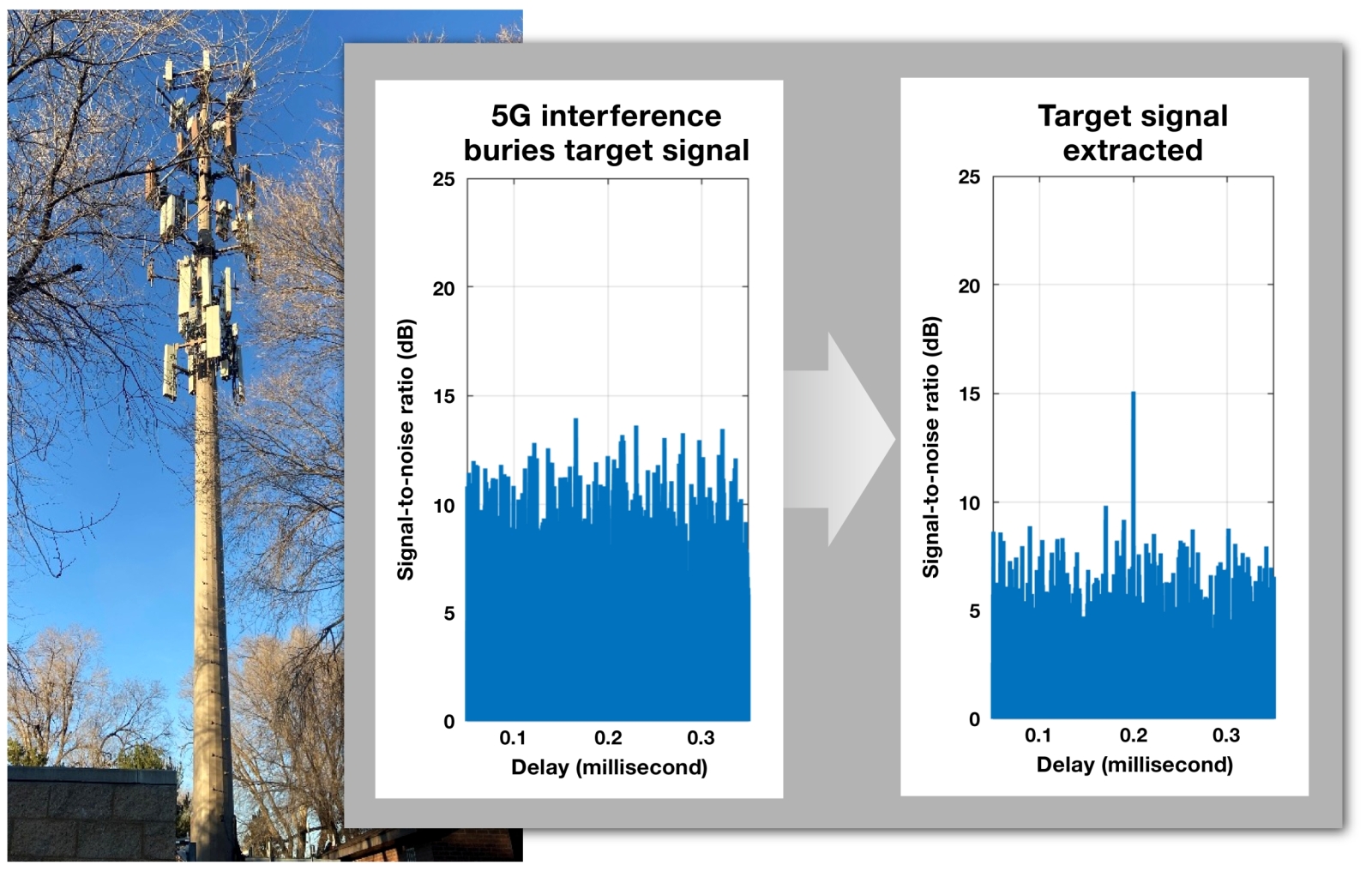
As 5G cellular networks have expanded, so has an unintended source of interference. In certain environments, powerful signals emitting from 5G base stations can encroach into frequency bands used by nearby non-5G RF antennas, burying signals for such systems as military radars, aircraft altimeters, satellite ground stations, or radio telescopes.
To cancel this interference, Laboratory researchers developed an algorithm that isolates and removes the 5G signal from the affected antenna's signal. Because 5G networks adhere to a published international standard, the canceler can decode the structure of a nearby base station's transmission — and estimate distortion caused by multipath scattering in the environment — well enough to reconstruct a copy of the interfering signal. That reconstructed copy is then subtracted from the incoming data, leaving a clean signal.
Unlike traditional interference cancellation approaches like beamforming, the technique does not depend on spatial separation of interfering and desired signals. Moreover, because it removes interference on each individual antenna channel of the receiver, it preserves the antenna resources that may be needed to handle other types of interference such as jamming.
The team validated the algorithm using signals captured over the air from a Nokia 5G base station at Hill Air Force Base. The tests recovered a test radar signal buried by the cellular interference. The signal was restored to within two decibels of its original signal-to-noise ratio, translating to 89% preservation of the radar's interference-free detection range.
"While 5G waveforms exhibit complex structure, their generation is governed by global standards that allow our cancellation methodology to generalize across base station radio heads made by a diverse set of vendors," says Binoy Kurien, principal investigator in the Tactical Edge Communications Group.
The DoW is now evaluating the technology for use on multiple platforms. Because the core structure of the 5G waveform is expected to carry into future cellular generations, this approach may also extend to interference from 6G networks as they emerge.
Inquiries: contact Kylie Foy