


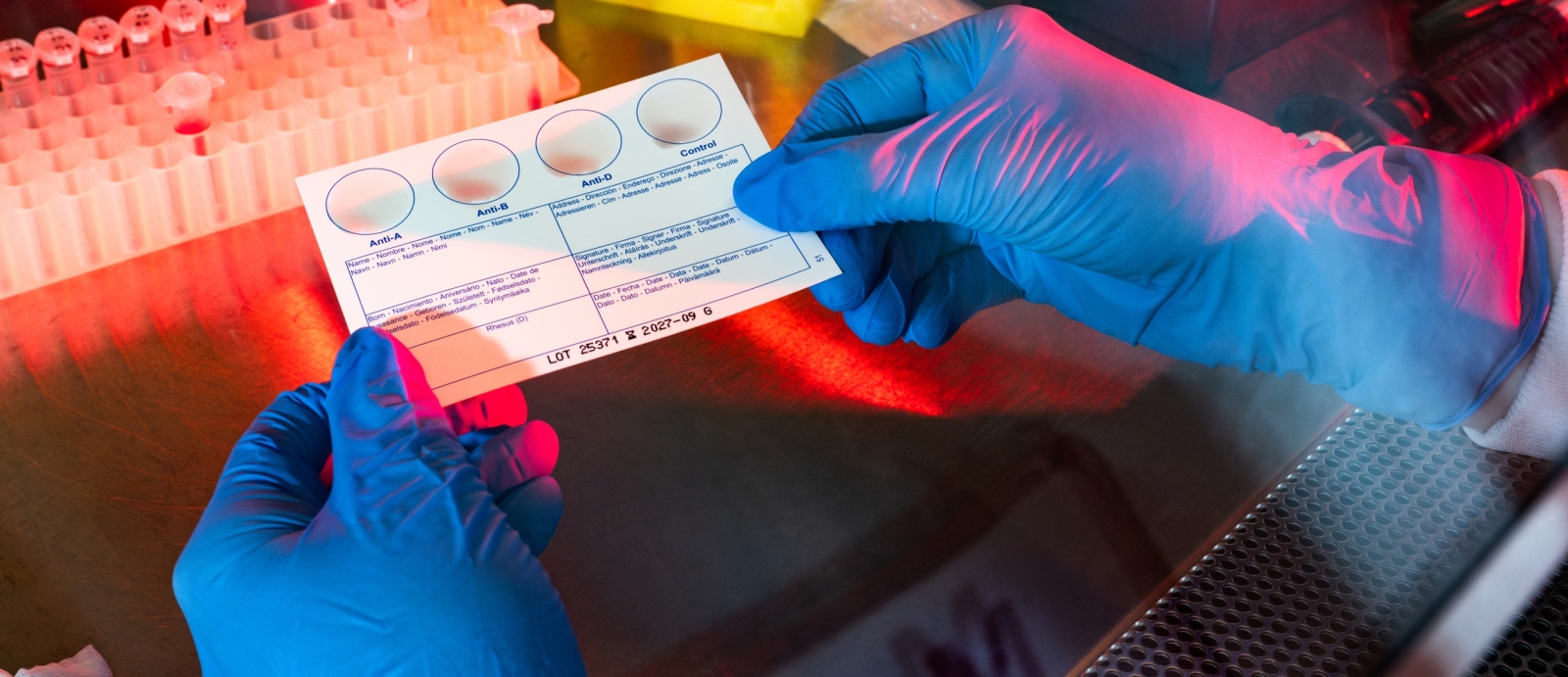
Blood-type conversion could expand emergency blood supplies
Researchers from Lincoln Laboratory's Biological and Chemical Technologies Group are developing methods to expand emergency blood supplies by quickly converting type B whole blood to universal type O at the point of need. Their work builds on a process first published by Danish researchers in Nature Microbiology that uses enzymes found in the gut to facilitate the conversion. The Laboratory team is adapting the process into a protocol for converting blood at the site of donation, making it compatible for any recipient, regardless of blood type.
The researchers initiated this project after brainstorming methods to help the U.S. military adapt large-scale combat casualty care to the demands of modern warfare. For the last two decades, treatment protocol for severely injured service members has been to evacuate and transport patients to an emergency medical facility within 60 minutes after injury. This 60-minute window, called the golden hour, is the time frame in which emergency treatment has the greatest impact on a patient's chances of survival.
However, the rapid influx of new technology has created a logistically complex battlefield where evacuation times can exceed 22 hours. This shift presents a challenge for field-forward care facilities that may lack the required supplies, equipment, and specialized training to perform life-saving interventions.
"The U.S. military's ability to rapidly evacuate casualties and bring in new medical supplies is changing," says Philip Fremont-Smith, the principal investigator for the project. "As you move closer to the point of injury, the availability of transfusable blood can diminish sharply, turning it into a critical bottleneck for treating casualties."
The team's blood type conversion protocol could improve blood supply restrictions that stress these field-forward and emergency response situations.
Translating the method for the field use
Using enzymes to convert blood type has been a topic of research since the 1980s. The Danish paper reports on two new enzymes (AmGH110A and AmGH20A) that work more quickly and efficiently for type B blood than those studied in the past. These enzymes work by cleaving off part of an antigen found on type B red blood cells (RBCs) — the B-type antigens are an extension of O type, so removing the part reverts them back to O. Antigens tell the immune system whether a substance is foreign or not, and transfusing a patient with the wrong type of blood triggers an immune response that destroys the RBCs. Converting them to universal O type eliminates this risk.
The Laboratory team found the paper's conversion results promising for further development and began translating the process into a practical procedure for the military.
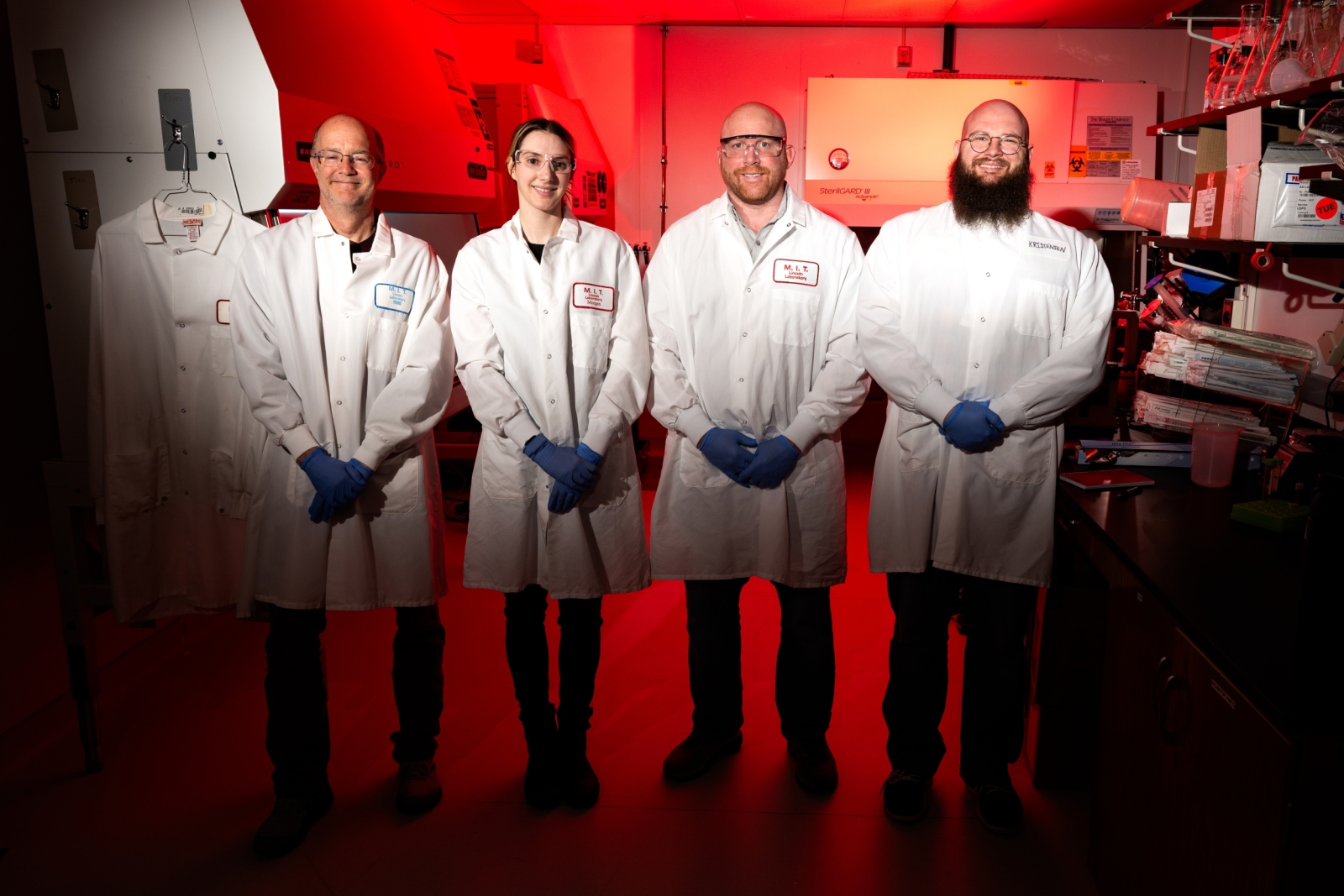
As a first step, they needed to validate the method. Staff member Morgan Burt, with assistance from Duane Lee Kristensen II, developed specialized assays — tools used to test the presence, amount, or activity of different substances — to evaluate the efficiency of the conversion process and determine how many B-type cells had been successfully converted in a unit of blood.
"It is very difficult to quantify the exact molecular density of the antigen on the cell surface, which also varies by donor," says Burt. "By adopting multiple, orthogonal assays ranging from bulk hemmagglutination, serum cross matching, and single-cell based analytics, we can paint a more holistic picture of conversion efficiency."
Next, the team adapted and streamlined the method, which uses packed RBCs, into a protocol for whole blood. Packed RBCs are the standard blood product used in hospitals for transfusions. They are a component of whole blood, which contains RBCs, plasma, and platelets. The military, however, uses whole blood to treat rapid blood loss because of its coagulative effects and simplified logistics to obtain and store.
For this step, the team tweaked different parameters of the conversion process — liquid versus powdered enzyme, amount of enzyme, rocking versus spinning the blood-enzyme mixture to facilitate the conversion — and ultimately reduced the process from six steps to two: add the enzyme directly to donated blood and agitate for 30 minutes to one hour.
"We spent several months removing washing steps and additional buffer steps until we simplified the method to just adding the enzyme and agitating," says Kristensen. "We shaved down an hour of prep work, and proved that the enzymes could convert whole blood without the addition of a conversion buffer."
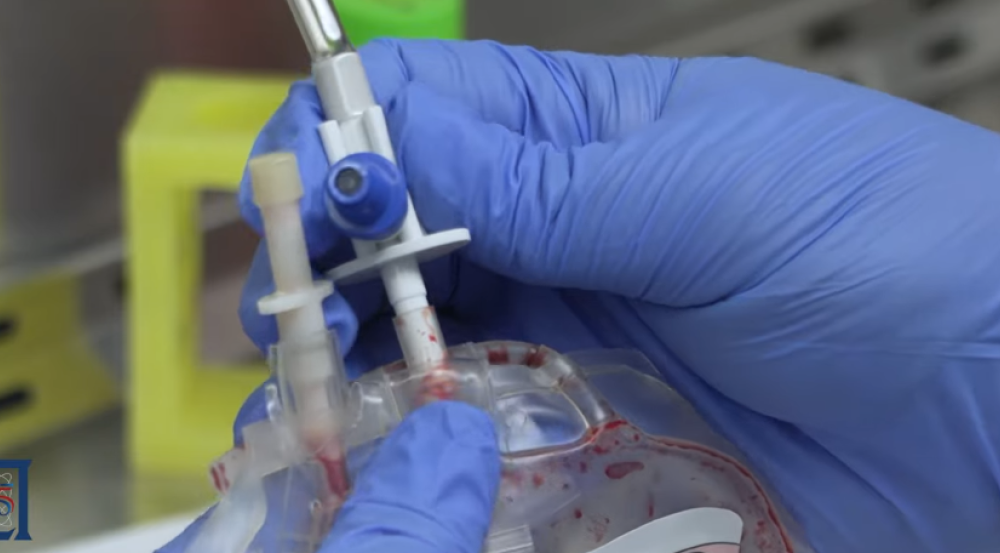
Research team member Todd Thorsen is now leading the effort to find the most efficient way to deliver the enzyme to a standard military blood bag for transfusion.
"A key challenge in translating this technology to the field lies in packaging the blood antigen removal enzymes into commercial blood bags," says Thorsen. "We are currently evaluating a few prototype designs that mix the blood with the enzyme at the collection point, with the aim of developing a hardware package that is comparable to existing kits used by clinical and field-forward medical personnel."
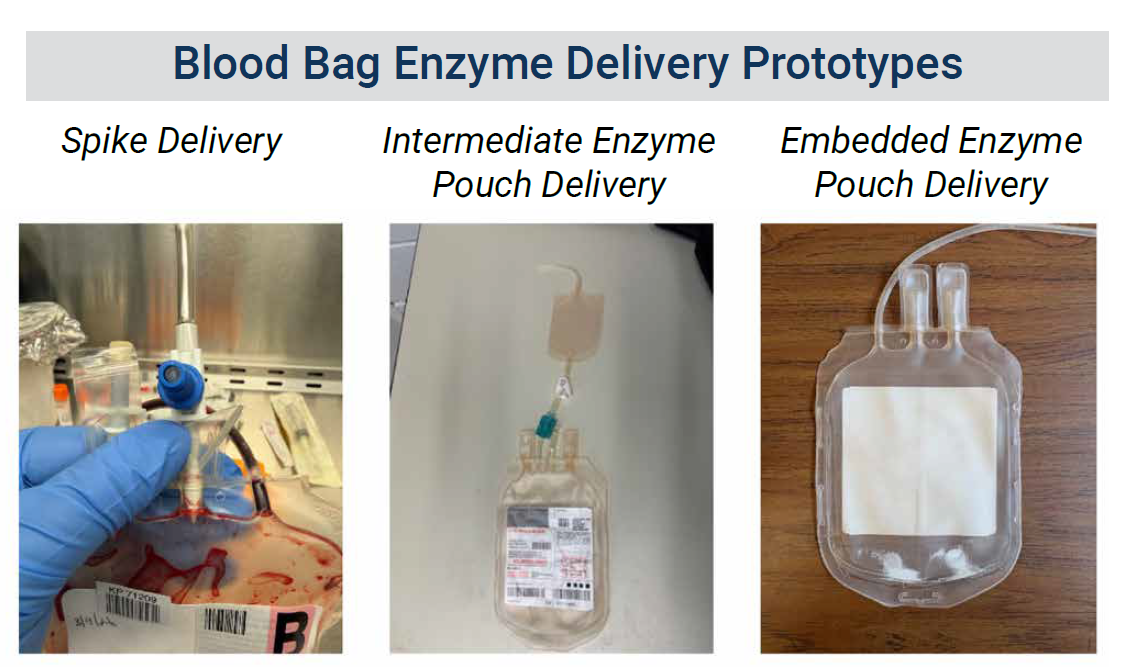
Although the Laboratory is focused on B-type conversion, they hope researchers working with A-type enzymes will eventually use these platforms to bring an A-type process to the point of need, too.
"We're envisioning a walking blood bank situation, in which someone who needs blood immediately and is on the battlefield, or at a field-forward medical facility, can receive that blood from any donor regardless of blood type," Fremont-Smith says. "For civilian applications, you can imagine mass-casualty events where blood types aren't known, or remote hospitals where a robust blood supply isn't available."
The project began in 2025 after the team won an internal funding challenge that encouraged the Lincoln Laboratory community to devise solutions to pressing problems in modern mass-casualty care. By design, the challenge featured several frontline speakers, who underscored the pressing need for advanced, field-forward blood access solutions. In 2026, the Defense Health Agency sponsored the team to conduct additional research into how the conversion may impact long-term blood storage. The goal with that work is to bolster the military's blood supplies overall by making all stored units universally compatible for transfusion.
"Lincoln Laboratory possesses the rare capability to advance concepts from initial design to functional prototypes, utilizing internal challenges to seed early-stage proof-of-concept studies and technology development,” says Heidi Perry, Lincoln Laboratory’s chief technology officer. “Close ties and direct engagement with the operational community ensures Laboratory staff understand critical mission challenges."
Inquiries, contact Anne McGovern.