


Gulfstream IV makes its long-awaited return to Lincoln Laboratory
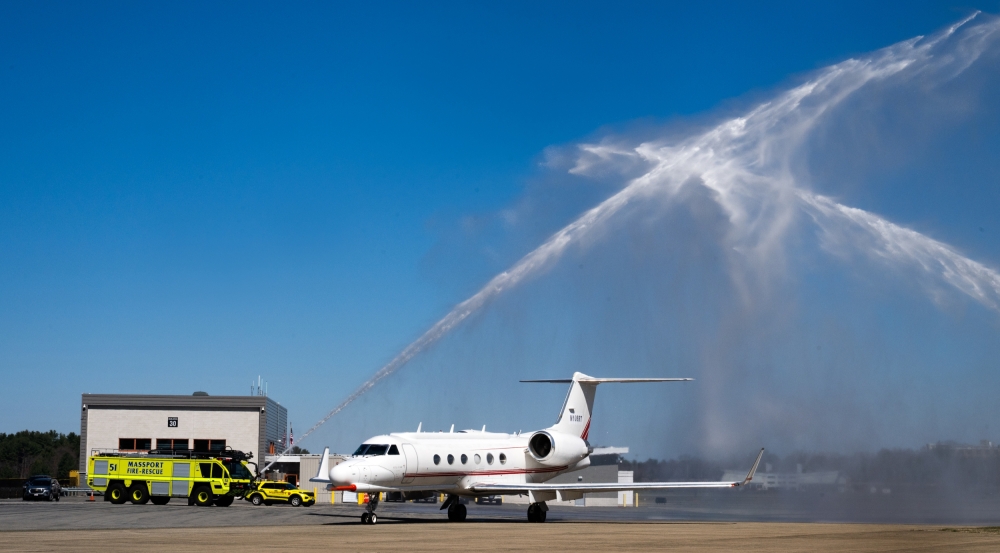
After extensive modifications over the past seven years, the Gulfstream IV (G-IV) aircraft operated and maintained by MIT Lincoln Laboratory's Tactical Defense Systems Group and Flight Test Facility (FTF) flew home from Canada in April. Transforming the standard business jet into a highly specialized research platform — which will support the U.S. Air Force's Air Vehicle Survivability Evaluation (AVSE) program for decades to come — represented the largest and most complex airborne test bed modernization in Lincoln Laboratory history. The Tactical Defense Systems Group, assisted by the FTF, coordinated the effort with the Toronto-based aerospace company Field Aviation.
"Our team made hundreds of trips to Canada and dedicated countless weekends to keep the project moving along," says David Culbertson, FTF manager. "Seeing the aircraft finally return to the Laboratory invoked a sense of pride and satisfaction."
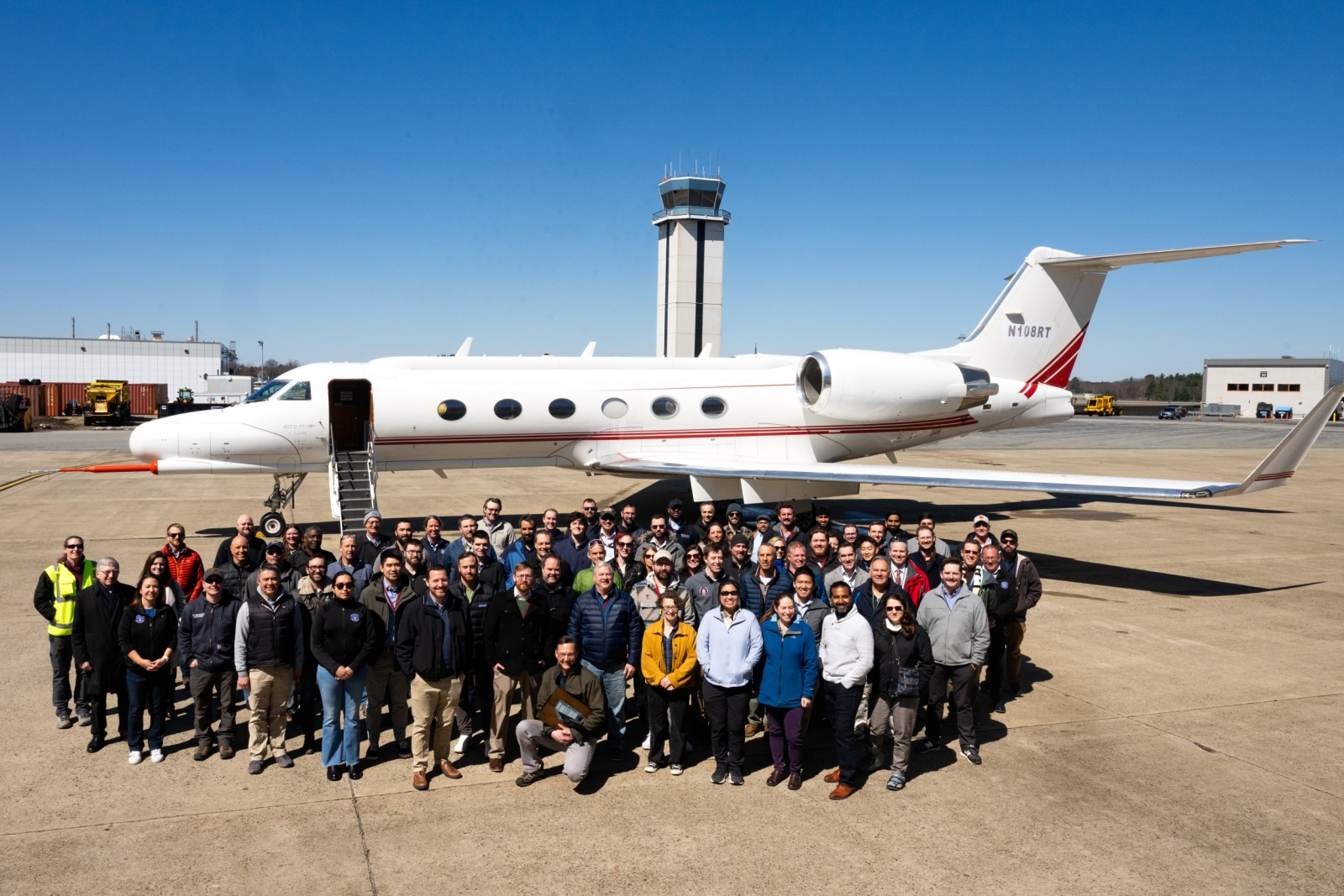
An airborne testing infrastructure
For more than 40 years, the Tactical Defense Systems Group has supported the AVSE program, leveraging airborne test beds to assess how U.S. aircraft and space assets fare against current and emerging threats. The group had been conducting airborne testing for the AVSE program with a modified Gulfstream II (G-II) since the early 1990s. In 2013, they began a series of studies to replace the G-II because parts availability issues were looming. These studies concluded that the G-IV was the best option given its performance and capabilities, including its respectively higher altitude and longer range; long-term sustainability; and cost. The Laboratory purchased the G-IV in 2015.
To avoid repeatedly reopening the costly Federal Aviation Administration (FAA) certification process over the planned operational lifetime of the G-IV (25 to 30 years), the group decided to complete all anticipated aircraft modifications at once rather than in phases. Following a competitive bidding process, the Laboratory selected Field Aviation to perform the modifications. Field Aviation had modified the G-II, in addition to other Laboratory aircraft. In December 2018, FTF pilots flew the G-IV to Toronto, where it was expected to remain for approximately three to four years.
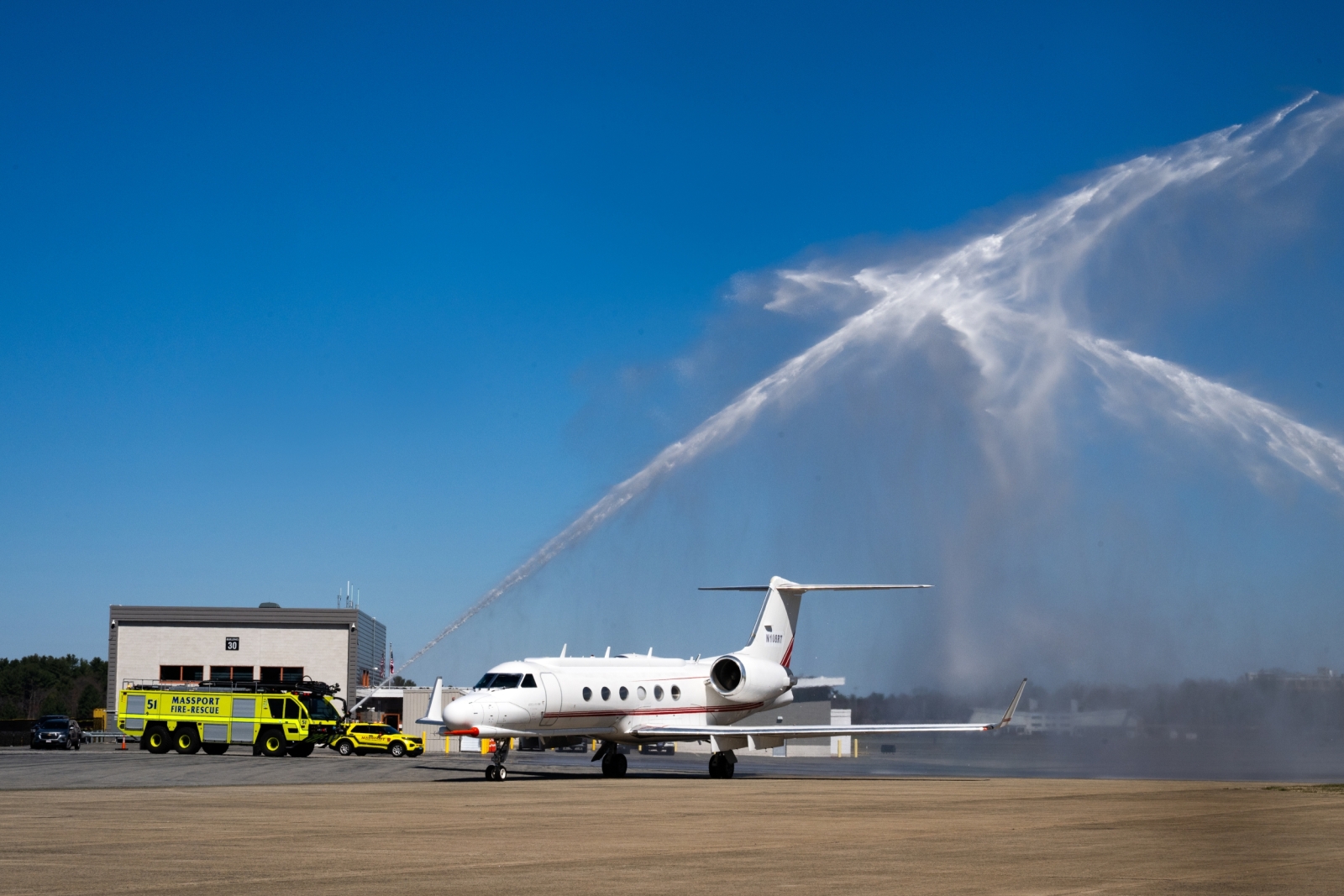
However, COVID-19-related disruptions and contractor management shifts extended this timeline. To help bring the aircraft home, the Laboratory stepped in to oversee aircraft modifications, maintenance, and reassembly. Laboratory engineers, mechanics, pilots, program managers, and legal teams worked together to secure Canadian work permits and maintain a continuous on-site presence. Senior aircraft mechanic Craig Rowe served as lead crew chief, traveling monthly with team members to Canada; for his efforts, he was recognized with a 2026 MIT Excellence Award for Outstanding Contributor.
A structural overhaul
To modify the aircraft, mechanics removed, tracked, and ultimately reinstalled more than 2,000 components. The revamped G-IV incorporated 12 major modifications that required sweeping structural changes.
For example, on the wings, mechanics installed four pylons for carrying external sensor pods weighing anywhere from 200 to more than 1,000 pounds. The wings had to be structurally fortified to withstand the added weight, stress, and aerodynamic loads that would be experienced during flight. They added a fifth sensor pylon, capable of holding up to 2,000 pounds and accommodating systems nearly 19 feet long, to the forward lower fuselage. Development of the pylons spanned nearly five years because of intensive reverse engineering, including purchasing and disassembling a wing from a scrapped G-IV to measure the internal structural components. Installation took almost two years because access to the inner wing structure was limited to small panels normally used for inspections.
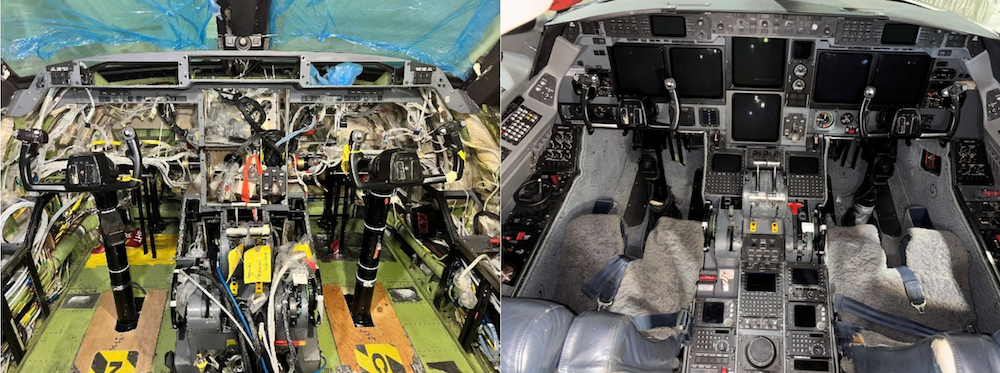
Mechanics modified the roof and lower fuselage to create flat surfaces to allow rapid mounting of external antennas and sensor systems without repeated incursions into the aircraft’s pressurized fuselage. They extended the aircraft's nose and tail with standardized sensor-mounting interfaces to enable rapid placement of sensors for both forward- and aft-facing test scenarios. The six-foot nose extension required completely gutting the cockpit so the internal structure could be reinforced to bear the weight of the mounting interface and test systems.
In the interior, the team installed 14 equipment racks; workstations for six onboard operators; fiber-optic, ethernet, and coaxial cables; liquid- and air-cooling systems; and dedicated power-distribution infrastructure separated from the baseline aircraft for safety reasons.
The remodel also required developing a means to generate sufficient electrical power to operate the test systems in flight while meeting FAA fire-containment standards. The aircraft’s original auxiliary power unit (APU) — normally intended to assist only with engine startup — was far too small for the mission requirements and could not operate airborne. Field Aviation engineers designed an entirely new fireproof titanium enclosure to house a larger APU capable of producing nearly double the original electrical output up to the 45,000-foot G-IV altitude ceiling. The Laboratory's Engineering Division ran simulations to validate that the APU inlet airflow would allow for maximum APU power output throughout the flight duration.
Steps toward mission qualification
After reassembling the G-IV, FTF mechanics conducted hundreds of operational checks to ensure every aircraft system disturbed during the modification worked properly and to validate aircraft safety and readiness to resume flight operations. The aircraft completed multiple post-modification flights without a single maintenance write-up.
"It's extremely rare for a heavily modified aircraft of this complexity to have no write-ups," says program manager Paul Mancini from the Tactical Defense Systems Group. "That's a testament to the quality of work of the FTF mechanics who put the airplane back together and the Field Aviation engineers who completed the modifications."
Since the G-IV returned home, test pilots have been evaluating its airworthiness, i.e., in-flight safety and functionality. The Tactical Defense Systems Group expects approximately another 18 months to complete flight testing, mission systems modification, test systems installation, and FAA certification before the aircraft becomes fully mission qualified to operationally support the AVSE program.
Inquiries: contact Ariana Gaines
Related Links