Mission outlook

Our R&D mission areas are positioned to mitigate national security challenges on the horizon:

Bolstering air, missile, and maritime defense

The United States faces a complex, multilayered security environment requiring air, missile, and maritime defenses against both traditional great-power competition and modern unconventional warfare. Through initiatives such as Golden Dome for America, the U.S. Navy's Next-Generation Attack Submarine, and low-cost autonomous systems programs across the DoW, we will continue to shape future architectures, mitigate technical risks, and collaborate with industry to address these threats. Focus areas will include advanced sensors, AI-enabled decision architectures, electronic warfare systems, scalable technologies for asymmetric deterrence, and realistic prototyping and test environments. By prioritizing these areas, we seek to increase U.S. military agility and flexibility for closing long-range engagements across all domains.

Securing cyber systems

We will research and develop new tactical signals intelligence capabilities to enhance situational awareness for U.S. deployed forces in contested environments. To defend the nation's most critical AI-enabled missions, we will work in partnership with the DoW and intelligence community to create effective processes for assessing and improving AI system security and reliability. We will continue constructing secure-by-design, formally verified, mission-specific integrated hardware-software computer stacks to ensure the cyber resiliency of next-generation platforms such as uncrewed robots and small satellites. Additionally, we will lead a consortium of FFRDCs and university-affiliated research centers to guide U.S. Cyber Command in advancing future generations of the Joint Cyber Warfighting Architecture.

Transforming ISR and tactical systems

We will continue to conduct systems analysis, technology development, prototyping, and field and flight testing to enable revolutionary new capabilities for ISR and tactical systems missions. Assessments of U.S. and adversary systems and recommendations for future development will address areas including stand-in and stand-off surveillance; RF, infrared, and optical sensing; electronic attack and protection; and survivable distributed architectures for contested environments. Emphasis will be placed on emerging concepts for breakthrough ISR and tactical systems that leverage cost asymmetries and U.S. technological advantage. Collaborative research and technology transfer with the U.S. industrial base will support service and joint force needs.

Protecting the homeland

The Golden Dome for America initiative renews emphasis on safeguarding the homeland from missile and drone threats. Countering drug trafficking across land and maritime borders is also an increasing priority. Toward these priorities, we will create new ways to defeat drone incursions and protect military bases, critical infrastructure, and border operations. These approaches will include advanced drone technology; low-cost RF and electro-optical sensors, and AI-enabled automation for rapid response. We will also explore a holistic approach to air, border, and maritime security to include solutions that expand beyond end-game defeat. The advancement of AI algorithms will help operators rapidly fuse data from diverse sources and make actionable decisions with certainty.

Advancing communications

The evolution of air platforms such as the B-21 bomber, collaborative combat aircraft, uncrewed aerial systems, and F-47 fighter jet combined with the maturation of joint operations will accelerate the development of multifunction communications equipment and the deployment of networked capabilities at the forward edge. The emergence of space as an operational domain and the national priority on space-based long-range effects will drive communications to large numbers of small platforms as well as networking across mission systems for real-time control. In addition, AI-enabled SATCOM terminals will be needed to create agility across best-of-class commercial systems and specialized space systems reserved for military use cases, such as highly contested environments and nuclear command and control.

Modernizing air traffic operations

As the nation undertakes a major air traffic control modernization initiative, we will advise the government and engage with industry to support rapid and effective deployment of new capabilities. Research and development will focus on air and surface surveillance, collision avoidance, weather sensing, traffic management automation, AI, cybersecurity, and resilient logistics. We will maintain a strong emphasis on achieving national and international approval, technology transition, and operational deployment for these technologies. Beyond our work in conventional aviation, we will pursue methods and technologies to approve and integrate new entrants — including large and small uncrewed aircraft systems, commercial space transportation, and advanced air mobility systems — into the national airspace.

Ensuring resilient human systems

Sustaining the health and resilience of service members and civilians is essential for national security. We will continue our work with the military health system and combatant commands to deliver field-forward medical diagnostic, treatment, and logistics capabilities that protect the well-being of deployed forces. To enable rapid response to natural or human-made biothreats, we will develop and transition biosurveillance technologies and AI-enabled tools that provide early warning of illness. Beyond supporting health, we are partnering with the government and industry to bolster the nation's biomanufacturing capabilities. These R&D efforts will help secure the domestic production of materials critical to national security.

Securing space enterprise resilience

The nation's military and intelligence missions increasingly rely on services provided from space. We will continue to shape future architectures to protect U.S. and allied interests in space and to assure space service availability for the joint force. We will develop and deploy new sensor systems, prototype modern data-fusion and -exploitation approaches, and provide mission support to improve space domain awareness. We will mature instrumentation and experimentation capabilities for the space test community and enable development of U.S. Space Force tactics. In addition, we will partner with industry to effectively employ the wide range of commercially available capabilities for the national interest.

Accelerating complex engineering

Our increasing use of digital engineering enablers — such as model-based practices, integrated modeling and simulation, connected planning and execution, digital twin technology, and AI — will accelerate the development of innovative prototypes. We will also expand our participation in relevant DoW strategic initiatives to develop and deliver capabilities that rapidly address emerging threats and technology gaps. We continue to finalize the design of the new Engineering Prototyping Facility, which will enable Lincoln Laboratory to develop increasingly complex prototypes for future national security needs. Construction is expected to start in 2028, and the building is scheduled to open in 2030.

Advancing technology

We will continue to pioneer foundational technology that enables new capabilities critical to maintaining U.S. technological edge. Our staff are developing extreme-ultraviolet lithography techniques to usher in a new generation of microelectronics manufacturing. Concurrently, we are leading the design and fabrication of quantum circuits to drive advances in quantum computing and sensing. Our teams are also advancing superconducting imaging arrays sensitive to single photons and progressing microwave photonics to enable faster, higher-bandwidth systems for defense and commercial applications. Pivotal to our future work, the Compound Semiconductor Laboratory–Microsystems Integration Facility, set to open in 2028, will serve as the nation's premier laboratory for prototyping advanced microsystems and integrating them into field-ready platforms.

Facility Modernization

Lincoln Laboratory's future facilities represent critical investments in national security. These state-of the-art facilities will enable us to design, test, and deliver advanced prototypes for ground, sea, air, and space systems for decades to come.
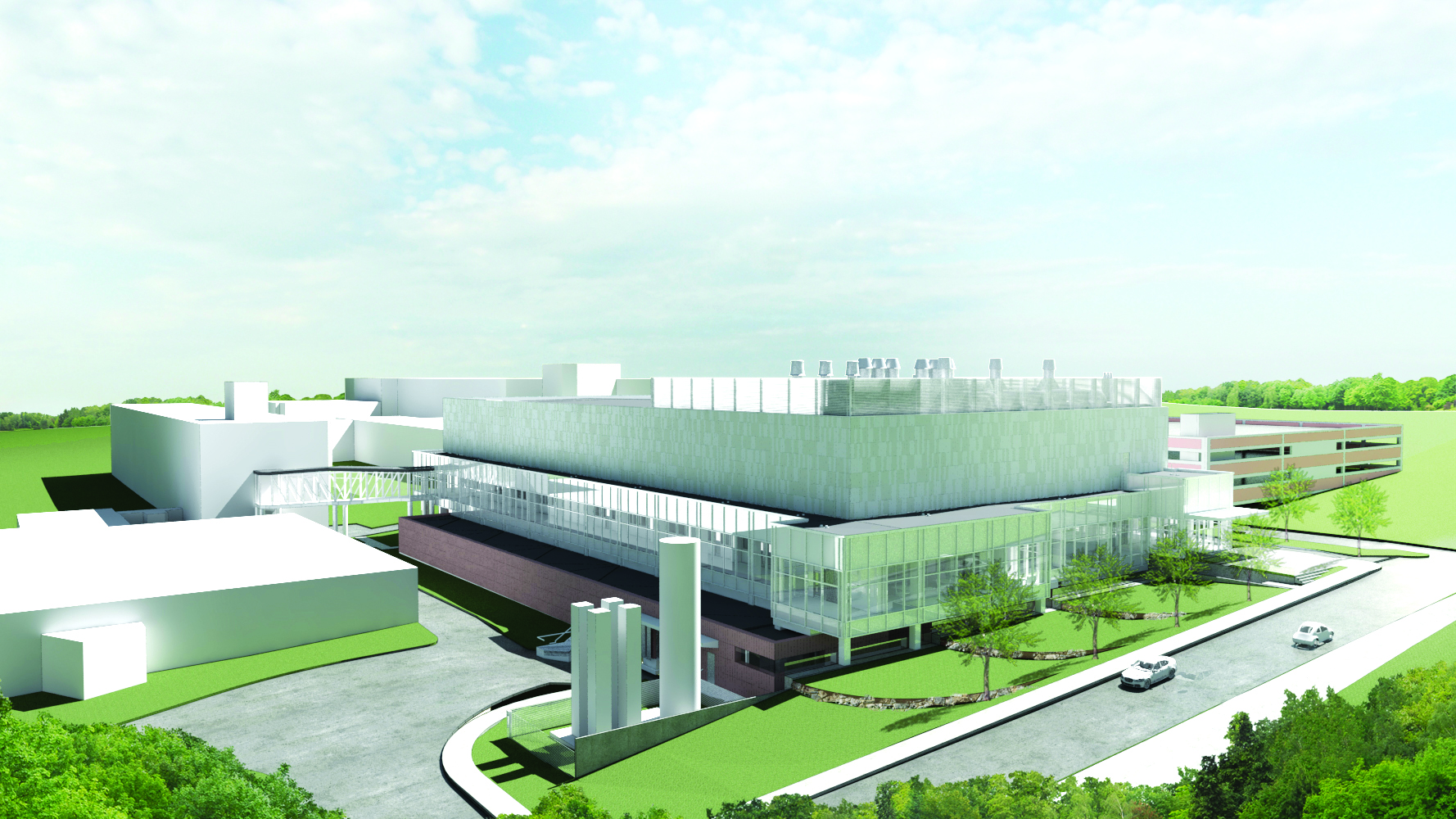
Compound Semiconductor Laboratory–Microsystem Integration Facility (CSL–MIF)

A design rendering shows the 160,000 square-foot CSL-MIF building.
The CSL-MIF, a rendering of which is shown above, is under construction and expected to open in 2028.

The CSL-MIF will provide 160,000 square feet of cleanroom space for developing complex electronic prototypes for DoW systems. Scientists and engineers will fabricate semiconductors made of two or more elements (compound semiconductors) and package specialized heterogeneously integrated electronics. Integrating different semiconductor materials and devices enables customizable microsystems for varied applications. Focus technologies include 3D-integrated focal plane arrays for surveillance, electro-optical systems for space-based optical communication, and superconducting microsystems for quantum computing. The CSL-MIF will complement our existing Microelectronics Laboratory, the U.S. government's most advanced silicon-based research facility.

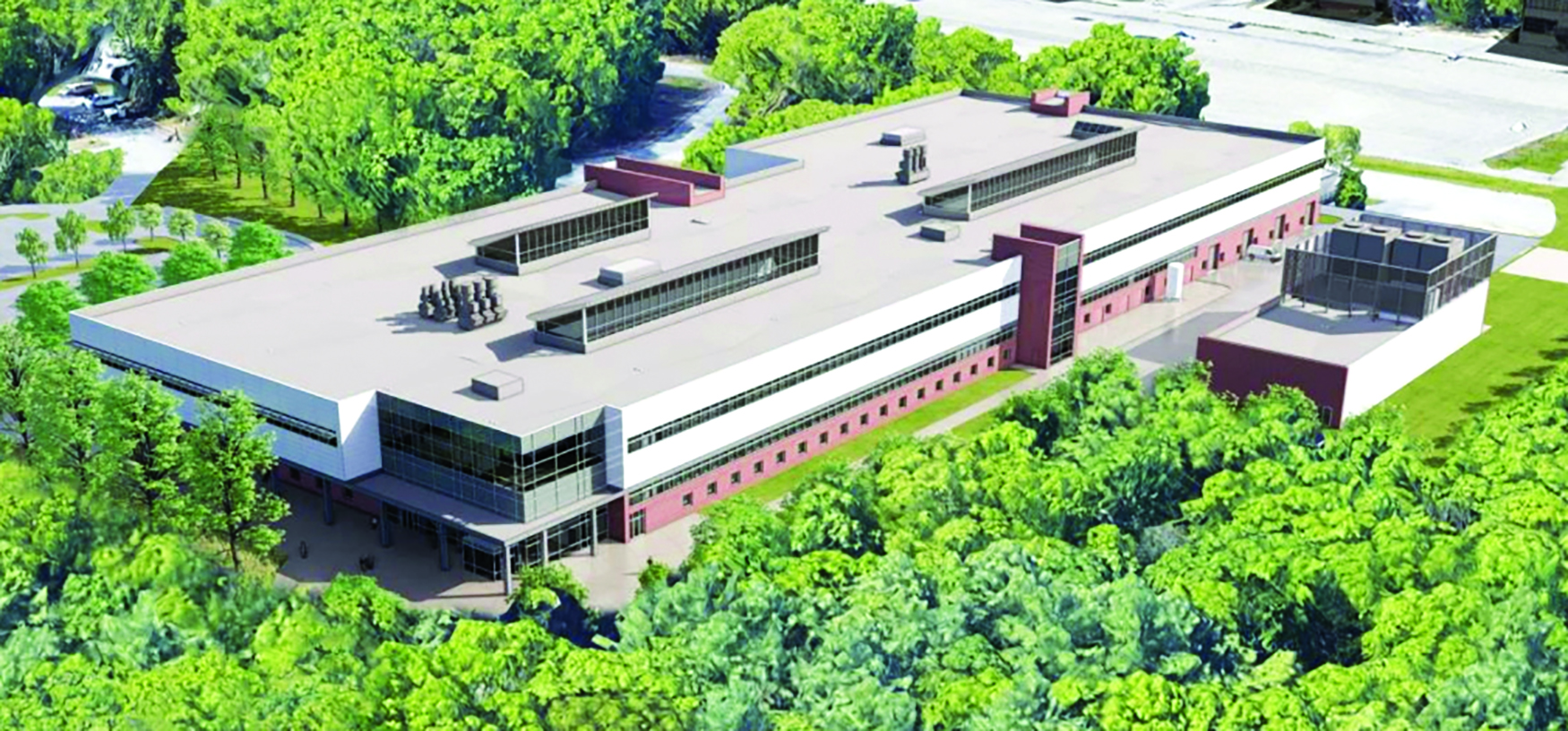
Engineering Prototyping Facility (EPF)

A design rendering shows the 290,000 square-foot EPF building.
The EPF, currently in the design phase, is expected to open in 2030.

The EPF will provide 290,000 square feet of infrastructure to support all phases of rapid and complex prototype development. Engineers and technicians will use this integrated space to design, simulate, fabricate, integrate, and test next-generation systems. Key spaces include assembly and integration labs, mechanical and electronic fabrication shops, vibration and environmental test labs, and secure prototyping spaces. Its flexible layout will accommodate work on emerging technologies while allowing rapid response to DoW prototyping needs.

As we mark 75 years of impact in 2026, our work for the nation continues.

Stay connected with MIT Lincoln Laboratory