


ISR Systems & Technology
Artificial intelligence has emerged as a powerful tool for rapidly processing data in challenging environments, providing insights for real-time decision-making. Lincoln Laboratory is evaluating a commercial AI processor developed by IBM for its potential use in various applications, such as automatically identifying objects in airborne images. Called NorthPole, the AI processor can perform complex tasks at high speed and low power in remote settings.
For the evaluation, the team integrated NorthPole into our Airborne Radar Testbed (ARTB), equipped with multimodal sensors. As the ARTB flew over Joint Base Cape Cod and acquired multimodal sensor images, NorthPole accurately detected test vehicles on the ground at the speed of data while consuming significantly less power than other commercial AI processors. This efficiency gain could be leveraged to quickly process additional data or different types of data simultaneously. We are now working with the warfighter community on validating the technology to enhance its effectiveness and efficiency.
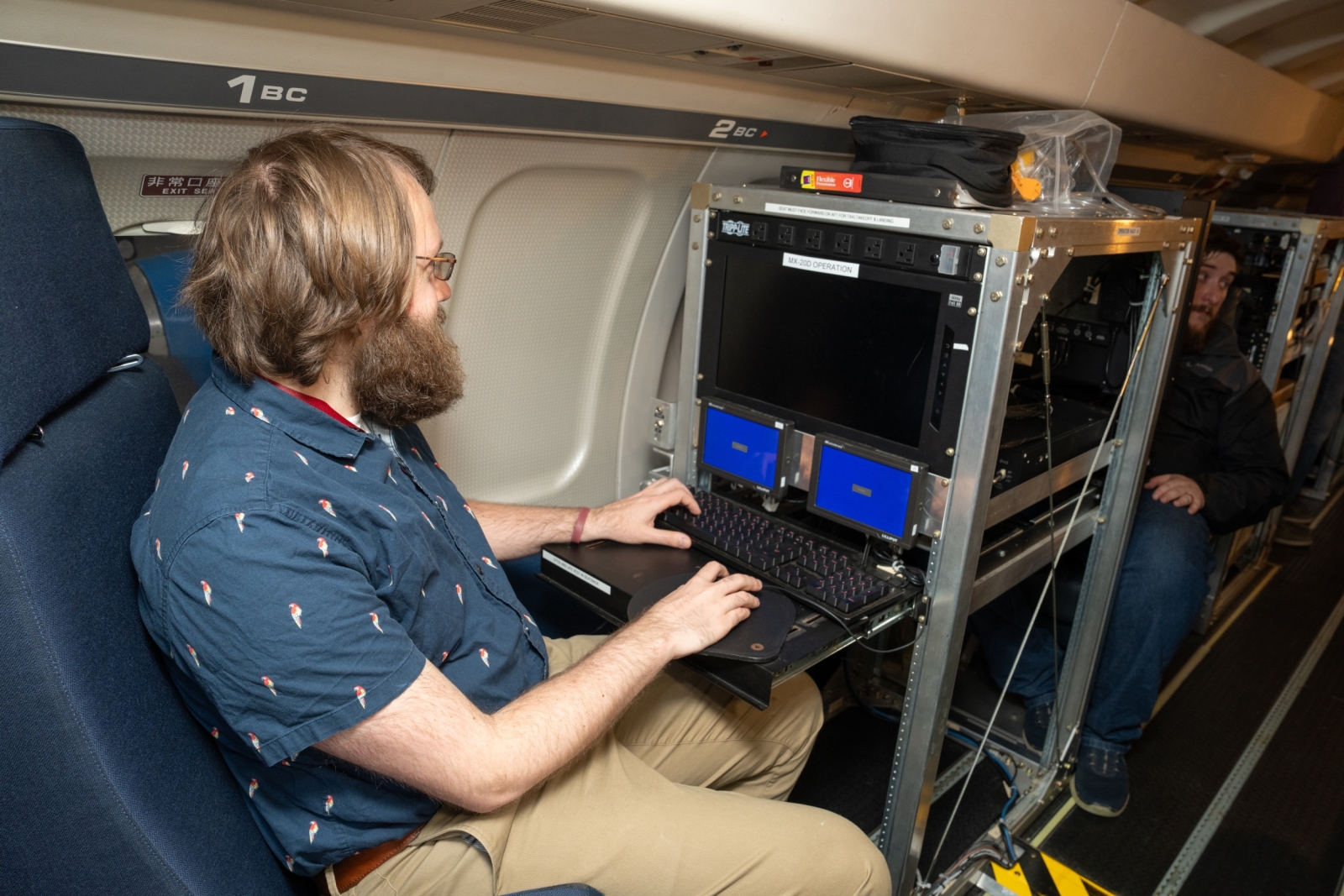
Richard Muri configures multimodal sensors for integration with NorthPole on the ARTB.
This flight testing opened entirely new ways of bringing AI inference to the edge with multimodal sensor fusion, and showcases Lincoln Laboratory's unique position in advancing cutting-edge science and technology in service of the nation.
Dharmendra Modha
Chief scientist, IBM
Biotechnology & Human Systems
Novel system tracks U.S. Navy sailors' sleep to improve operational readiness
Lincoln Laboratory is a national leader in developing human physiological monitoring systems to warn of threats to military missions. From sensors that detect heat injury to software that helps diagnose brain trauma, the Laboratory's fielded solutions have impacted thousands of military personnel.
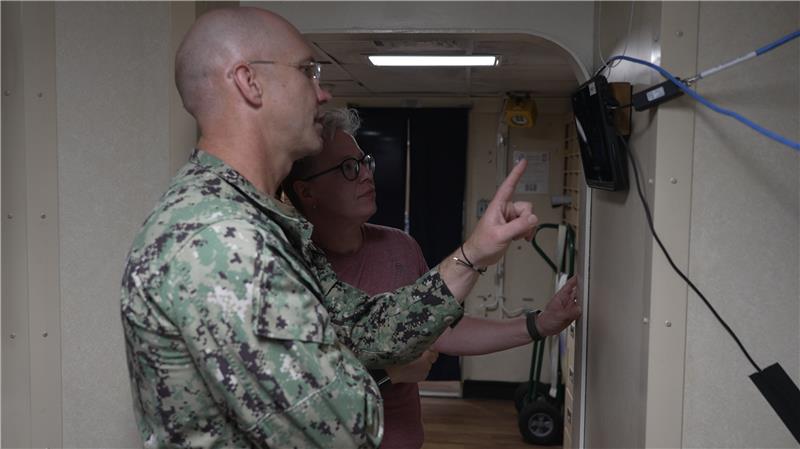
CAPT Andrew Koy, Sr., Commanding Officer of the USS Somerset (LPD 25), interacts with a CREW hub for the first time with guidance from staff member Molly Crane. Photo: Jay Couturier, MIT Lincoln Laboratory
One such technology — the Command Readiness, Endurance, and Watchstanding (CREW) system — passively collects and analyzes data from wearables to help U.S. Naval commanders make quick and informed decisions about sailors' sleep physiology. Developed in partnership with the Naval Health Research Center, the Commander of Naval Surface Forces Pacific, and industry, CREW targets a pressing problem for U.S. Navy fleets: sleep deprivation. Fatigue from lack of sleep can lead to cognitive issues such as poor decision-making, focus, and memory.
Currently, there is no way to collect objective sleep data on sailors while at sea beyond manual reporting and observations. CREW performs this function digitally, where a sailor's wearable data are automatically uploaded to data hubs dispersed throughout their ship. This "closed loop" allows the data to circulate from sailors to Naval digital systems without the need for an internet connection, which is often unavailable at sea. In recent demonstrations, CREW accelerated delivery of actionable insights to leadership from two weeks to two minutes.
With real-time data from CREW on how well-rested my team is, I can make better informed decisions about workloads and scheduling to ensure our mission success.
CAPT Andrew Koy, Sr.
Commanding Officer of the USS Somerset (LPD 25)
BIOTECHNOLOGY & HUMAN SYSTEMS
Throwable sensor detects chemical and biological threats
The Tactical Optical Spherical Sensor for Interrogating Threats (TOSSIT) is a throwable, baseball-sized sensor that remotely detects hazardous vapors and aerosols. It is designed to alert military service members, as well as first responders and law enforcement, to the presence of chemical threats like nerve and blister agents, industrial chemical accidents, or fentanyl dust. Users can simply toss, drone-drop, or launch TOSSIT into an area of concern. To detect specific chemicals, the sensor samples the air with a built-in fan and uses an internal camera to observe color changes on a removable dye card. If chemicals are present, TOSSIT alerts users wirelessly on an app or via audible, light-up, or vibrational alarms in the sensor.
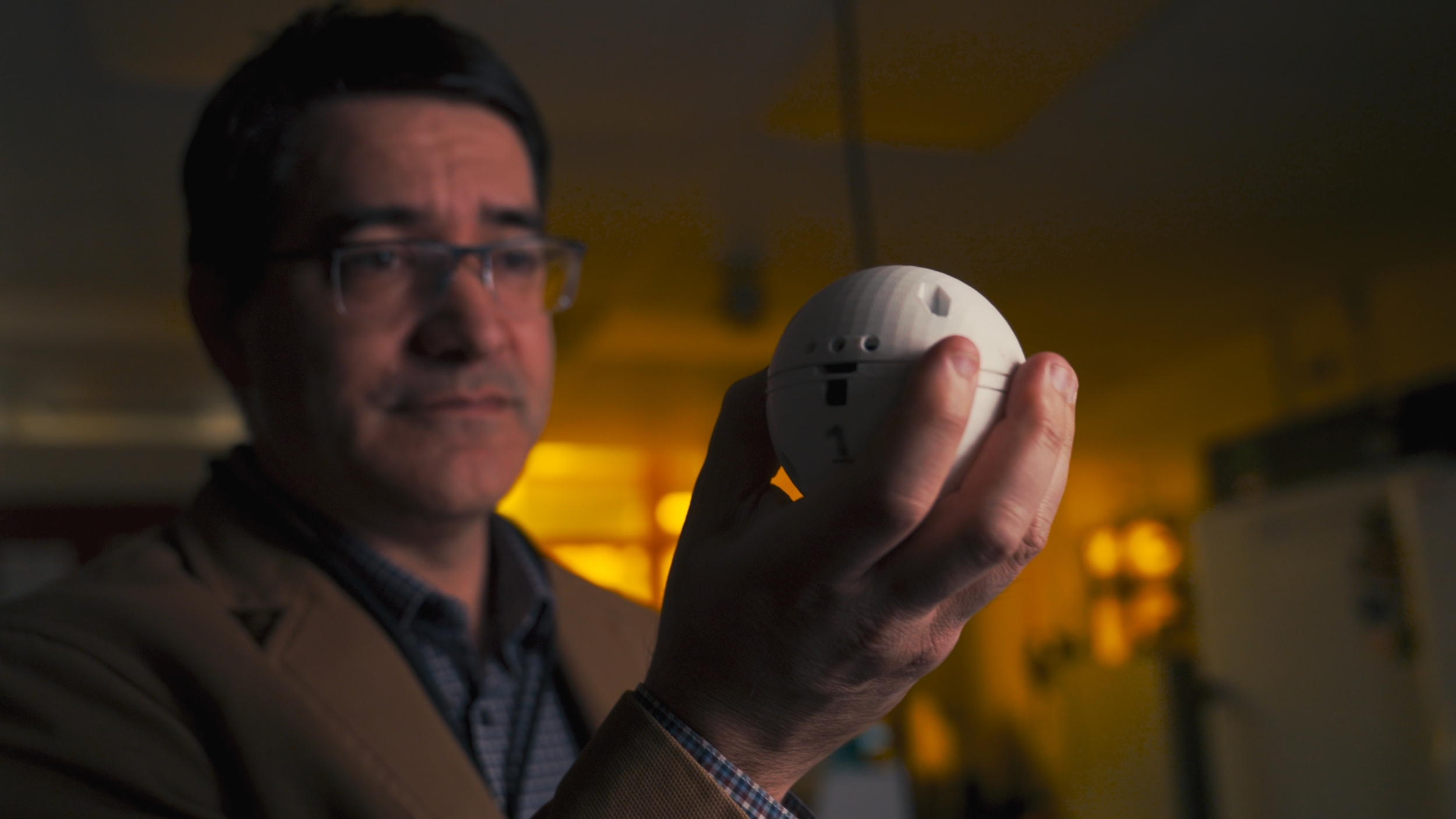
Researchers Richard Kingsborough and Jude Kelley developed TOSSIT, a baseball-sized sensor designed to remotely detect chemical or biological threats.
TOSSIT fills an unmet need in the U.S. military for a kinetically deployable, low-cost sensing option that detects vapors and solid aerosol threats otherwise undetectable by current sensing systems. Our deep knowledge of the current chemical threat environment, paired with our world-class development capabilities, made us uniquely suited to develop and deliver TOSSIT into the hands of service members.


