


The Technology Transfer Office oversees the full technology lifecycle — from disclosure and protection of intellectual property (IP) to transition, licensing, and long-term stewardship. This comprehensive approach ensures that Lincoln Laboratory inventions achieve maximum impact.
FY25 technology transfer by the numbers
We advanced a diverse portfolio of IP for transition to and use by government and industry partners.
59
invention disclosures filed
104
software/non-software copyright disclosures filed
42
patents filed
32
patents issued
Technology readiness levels
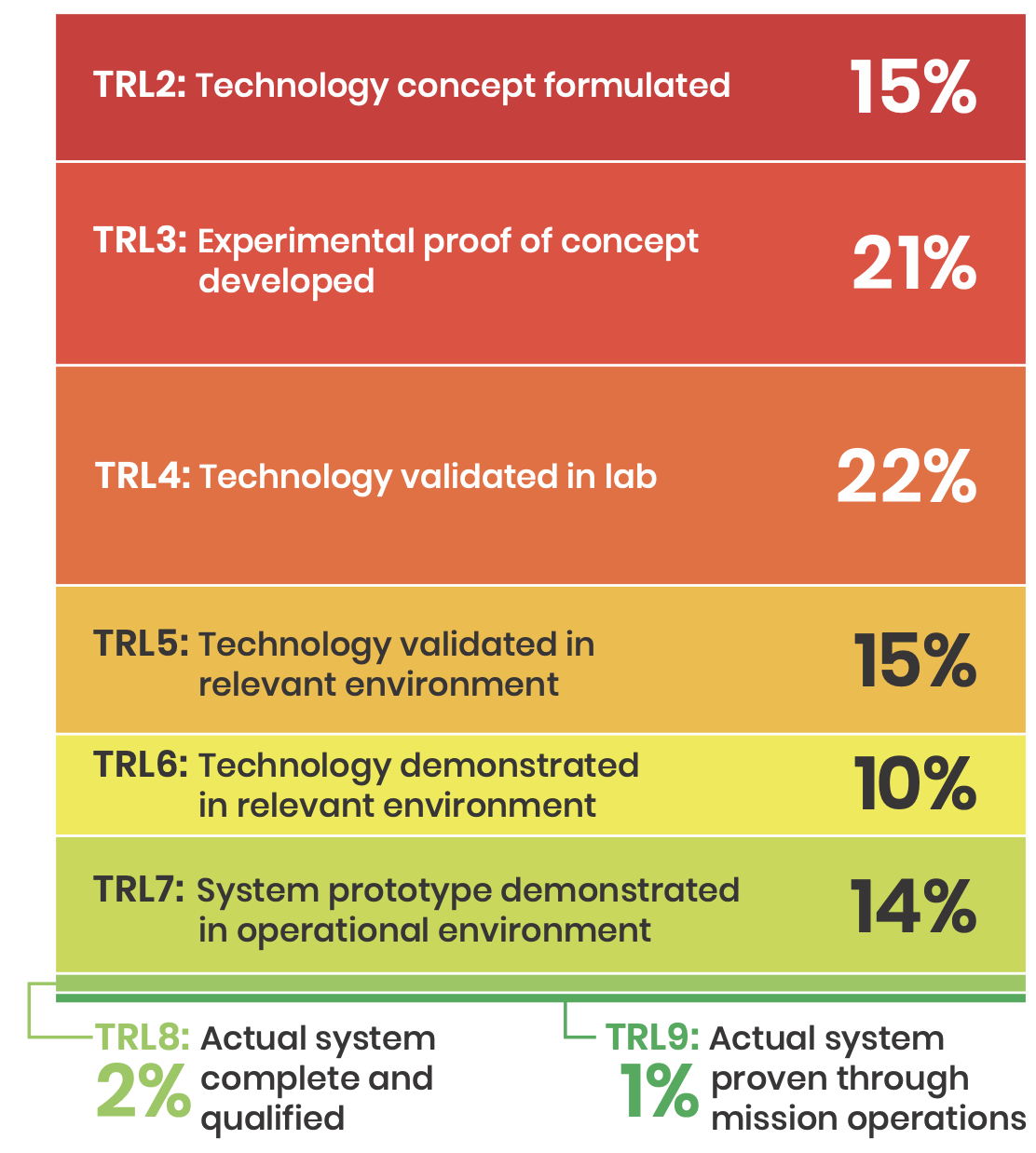
Technology readiness levels (TRLs) provide a common framework for evaluating how far a technology has progressed from basic research to operational use, with each level (1–9) representing increasing levels of proof and validation. Our innovations transitioned at nearly every stage of development. Early-stage technologies moved to collaborators for co-development while mature technologies advanced toward commercialization or operational use.
FY25 IP portfolio by technical domain
Our IP portfolio spans nearly 20 research domains, reflecting our multidisciplinary contributions to national defense and scientific advancement with broad national impact.
55
Government-Directed Transfers
Technologies transition to government sponsors or their designated contractors for continued development, production, or operational use.
New test bed code is accelerating software upgrade assessments for F-35 aircraft. Photo: Staff Sgt. Darlene Seltmann, U.S. Air Force
Accelerating F-35 capabilities
The Knowledge Management Analysis and Architecture Support F-35 Tracker Test Bed Code streamlines the evaluation of F-35 software upgrades. It autonomously assesses these upgrades and provides real-time feedback to both the software vendor and warfighter, ensuring faster insights into capability improvements. By cutting data analysts' workload by 80%, the code allows for the evaluation of more missions and data, increasing the delivery of reliable, capable products to the military. Shared through a military software consortium, this tool supports the Air Force Operational Test and Evaluation Center's shift toward modern, agile acquisition processes — helping deliver F-35 capabilities to the warfighter with greater speed and effectiveness.
15
Collaborative R&D Agreements (CRADAs)
Partnering with industry through cooperative research advances dual-use and commercial technologies that strengthen both defense and civilian sectors.Expanding Weather Intelligence
Miniaturized microwave sounders are enhancing the delivery of timely storm information to global agencies and industries. First pioneered for the TROPICS NASA science mission, the technology was transitioned via a CRADA to Tomorrow.io, a leading provider of weather intelligence, for integration on a large constellation of CubeSats. In May 2025, Tomorrow.io announced that its operating sensors were providing 45% of the most recent atmospheric soundings from space. The full constellation is expected to achieve global coverage at unprecedented revisit rates of under 60 minutes. This level of coverage — particularly over oceans and other radar-sparse regions — will significantly improve the accuracy of predictive forecasting. This technology won a 2025 FLC Excellence in Technology Transfer Award.
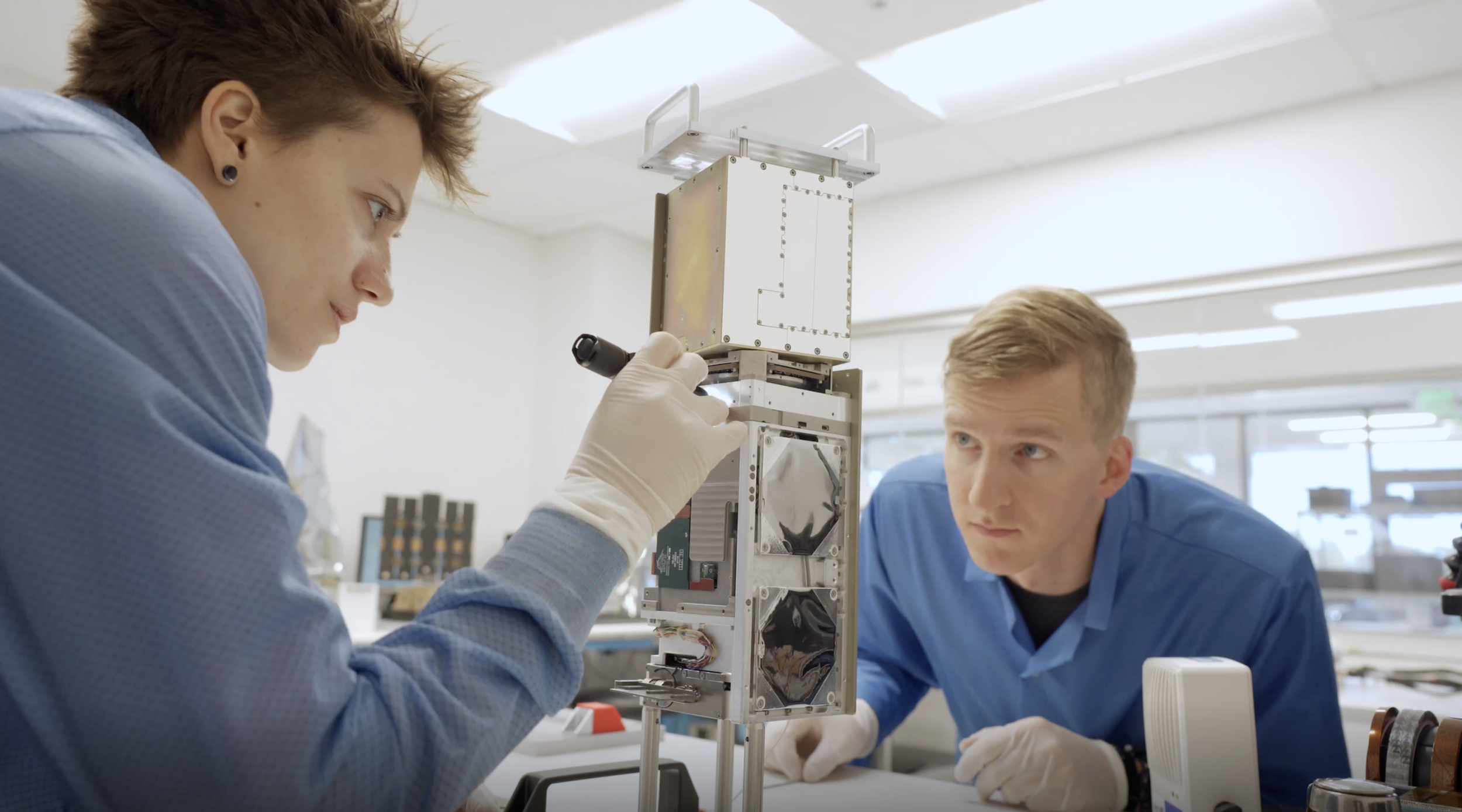
Mini microwave sounders developed at Lincoln Laboratory, demonstrated on a NASA mission and now transferred to industry, are expanding storm-forecasting capabilities.
32
Small Business Innovation Research Awards (SBIR/STTR)
Working with small businesses through competitive federal R&D programs matures emerging technologies and strengthens the national industrial base.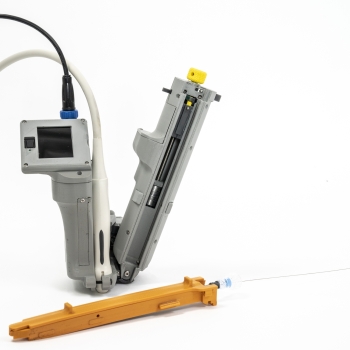
AI-GUIDE is a handheld device combining ultrasound, a user-guidance screen, blood-detecting optics, and a cartridge preloaded with a guide wire for accessing major blood vessels.
Saving lives in emergencies
The Artificial Intelligence−Guided Ultrasound Intervention Device (AI-GUIDE), which we developed in collaboration with Massachusetts General Hospital, helps emergency responders quickly and accurately access blood vessels in trauma patients to administer life-saving interventions. Demonstrated during exercises at Fort Bragg, AI-GUIDE received overwhelming support from U.S. Army Special Operations Command assault medics for its utility in post-injury care environments. The device transitioned to spinout company AutonomUS Medical Technologies, which is advancing AI-GUIDE toward commercial availability for use in emergency, military, and trauma care settings.
9
Commercial Actions
Granting commercial entities the rights to manufacture, sell, or apply our technologies turns government-funded research into deployable products.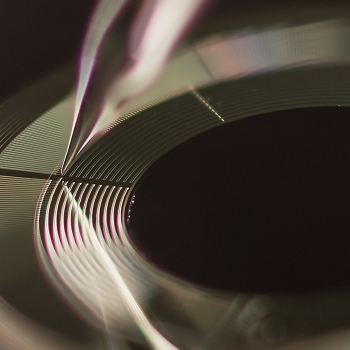
Microhydraulic actuators use electrowetting, a technique that applies voltage to water droplets to control their surface tension and enable precise motion. Here, droplets are inserted into an actuator.
Advancing semiconductor packaging
Microhydraulic actuators take advantage of surface tension to offer highly efficient, powerful, and precise movement in microsystems, with wide applicability in areas such as robotics and industrial operations. Spinout company Sangtera has licensed the technology for its applications in advanced semiconductor packaging. The National Science Foundation is funding Sangtera to develop high-throughput chiplet-to-wafer bonding equipment to support next-generation semiconductor fabrication needs, promoting domestic leadership in microelectronics manufacturing.
22
Open-Source Projects
Releasing our software accelerates innovation across sectors, promotes transparency, and maximizes taxpayer investment.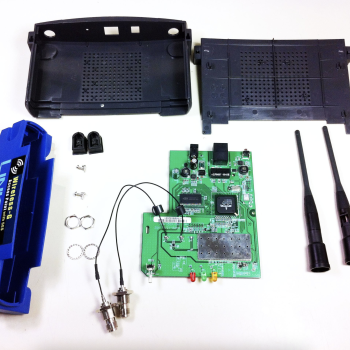
The Igloo Rehosting Platform lets users reverse engineer embedded systems, like this wireless router, without needing the physical device. Photo: Mathew Fuller, iFixit.com
Verifying device security
The Igloo Rehosting Platform allows users to recreate the runtime environment in devices like routers, cameras, and industrial sensors to analyze their security properties without needing the original hardware. The U.S. government sponsor of this platform requested its open-source release, allowing us to work with partners to apply the tool to various use cases and build a community around this innovative security analysis capability.
Transition Tracking Action Group
In accordance with the DoW's new Transition Tracking Action Group initiative, we are collecting metrics to help the DoW and other government stakeholders evaluate how innovations from FFRDCs like Lincoln Laboratory move from research to real-world use. In this first year of tracking, the group established a framework to measure the downstream impact of each transfer in terms of advancing a defense program, enabling a new sponsor capability, or accelerating commercial adoption. Using this framework, we evaluated our 55 government-directed technology transfers in 2025, with the following results:
77%
were inserted into a DoW program
80%
were implemented in a new or existing software system
60%
were transitioned to industry for further development or production
70%
were delivered to the original funding sponsor
37%
were delivered to a non-funding government agency for continued use
30%
were fielded for operational use
Future vision
In the years ahead, we will continue strengthening how we protect and deploy innovation, aligning our practices with DoW Instruction 5535.08 (DoW Domestic Technology Transfer Program) to establish a consistent federal framework for domestic technology access through licensing and partnerships. This approach promotes the U.S. adoption of federally developed technologies while safeguarding sponsor interests, protecting national security, and upholding FFRDC obligations.


