


Designing a motion-tracking sleeve, building a submersible robot, and applying machine learning to predict hypothyroidism — these projects are just a few that students worked on during the 2025 Beaver Works Summer Institute (BWSI). This four-week program, which started in 2015 with a single course and 46 students, engages rising high school seniors in hands-on STEM projects. Celebrating its 10th year in 2025, BWSI ran 14 courses serving 450 students virtually and in person. The in-person program, hosted at the Beaver Works Center in Cambridge, Massachusetts, featured daily talks by industry leaders in STEM careers and culminated in a final day of competitions and demonstrations.
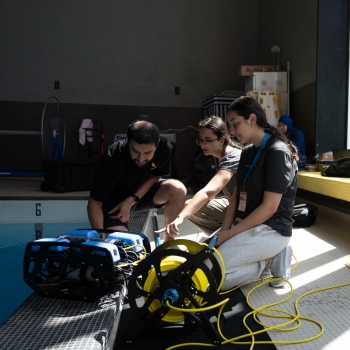
BWSI students in the Autonomous Underwater Vehicle Challenge make programming adjustments and check the build of the submersible to ensure it can move efficiently underwater.
The following courses were offered in the 2025 program:
- Autonomous RACECAR (Rapid Autonomous Complex Environment Competing Ackermann steeRing Robot) Grand Prix
- Autonomous Underwater Vehicles Challenge
- Medlytics
- Microelectronics and Hardware Development
- Unmanned Air System–Synthetic Aperture Radar
- Embedded Security and Hardware Hacking
- Cyber Operations
- Quantum Software
- Basics of ASICs (Application-Specific Integrated Circuits)
- Autonomous Cognitive Assistant (CogWorks)
- Remote Sensing for Disaster Response
- Serious Games Development with Artificial Intelligence
- E-Textiles and Wearable Technology
Student Radar Reflectors Imaged from Space
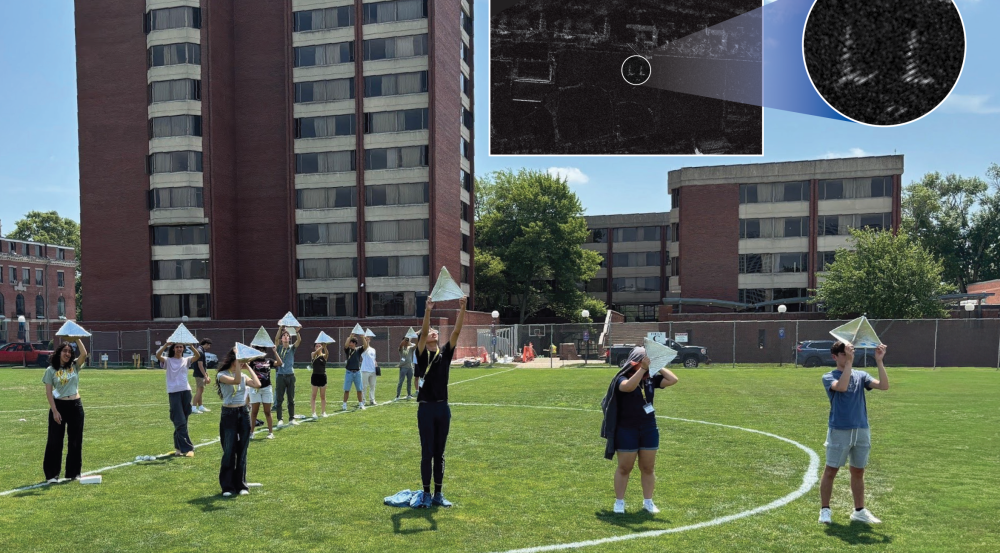
Students arrange their reflectors to spell out "LL" for "Lincoln Laboratory." The reflectors were successfully imaged by Umbra's SAR satellite.
Staff leading the BWSI course on synthetic aperture radar (SAR) collaborated with the commercial satellite company Umbra to give students the opportunity to have their work imaged by a satellite. The four-week Unmanned Air System–SAR course offered 26 students the experience of building a radar imaging system. The satellite passed over MIT campus on July 25 and imaged radar reflectors the students had created out of cardboard and aluminum foil. Beaver Works Operations Manager Lisa Kelly says, "This experience reflects the type of innovative learning that makes BWSI so impactful and continues to set the program apart."
Lincoln Laboratory Radar Introduction for Student Engineers
Summer
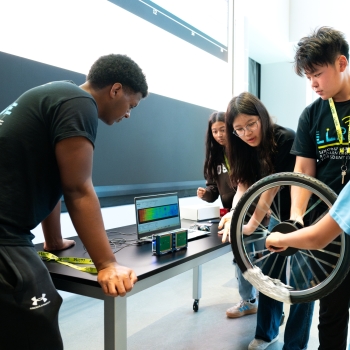
LLRISE students visit the MIT Museum in Cambridge, Massachusetts, to demonstrate how their self-built radar recognizes motion.
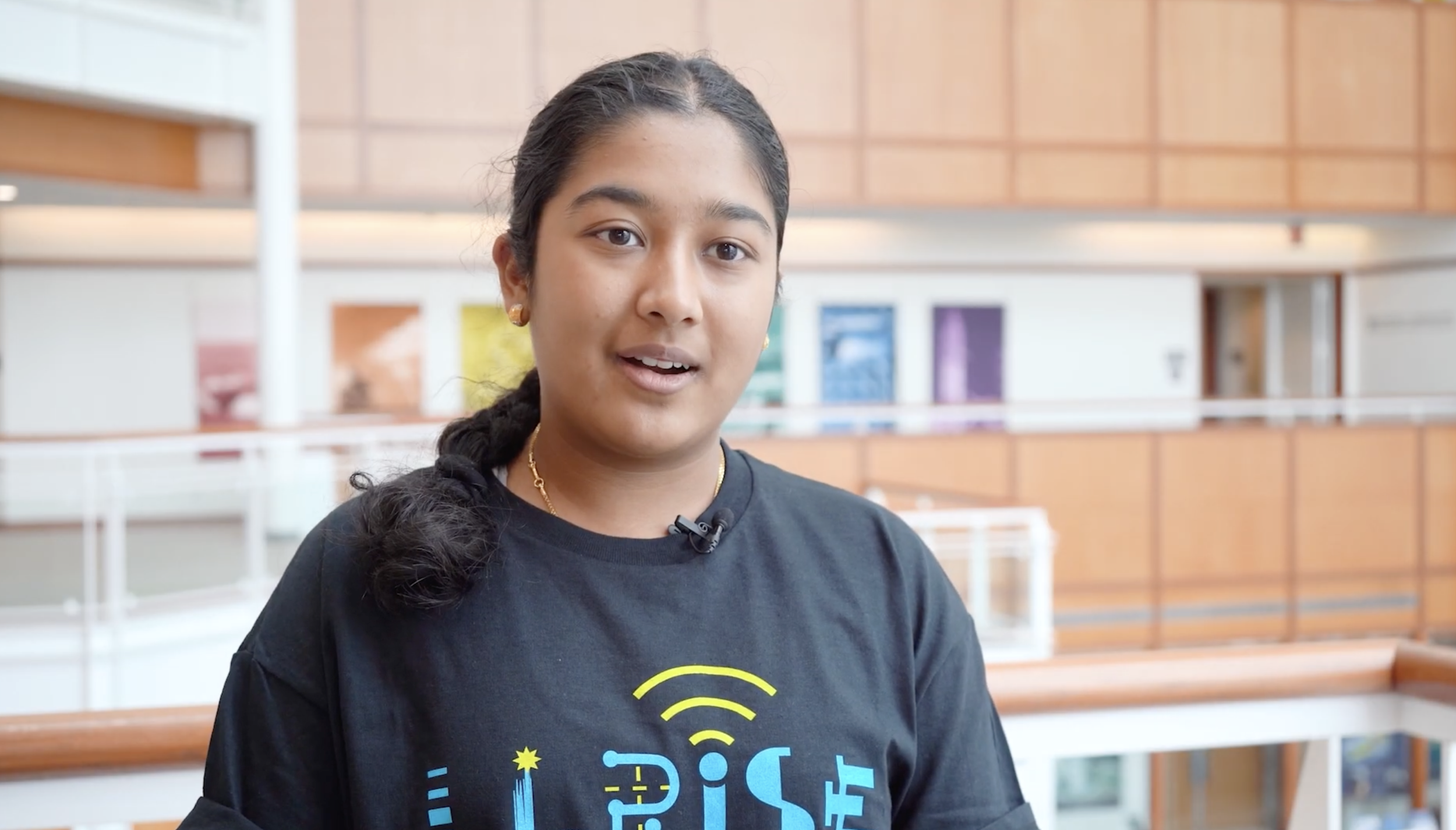
The LLRISE–Summer program marked its 14th year and accepted 26 students nationwide out of 800 applicants. Rising high school seniors in the program take college-level courses in electromagnetic signal processing, RF design, pulse compression and ranging, and synthetic aperture radar and learn about Lincoln Laboratory’s role in radar development. They design their own small radar systems while learning how to populate a circuit board, code in Python, solder a radar antenna, and 3D print an antenna frame. "Students not only learn how to design a radar but also build one from scratch," says Chiamaka Porter, LLRISE coordinator. They then design and execute an experiment using their radar and present the results.
Reflecting on his experience, one student shared, "Through LLRISE, I was able to apply my STEM knowledge by collaborating with like-minded students on projects and homework, and by speaking with professionals. It was a fun and fulfilling experience for me and had a great impact on my STEM career."
Spring
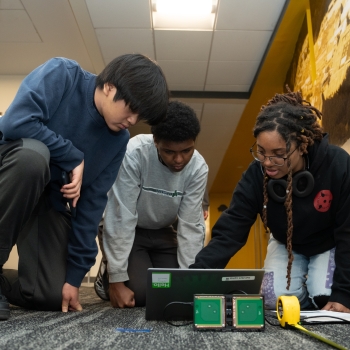
Participants in the LLRISE-Spring session test their self-built radar to detect movement down a long hallway.
The LLRISE–Spring session gives students a whirlwind tour of engineering projects. Focusing on pulse compression and ranging, this abridged version of the two-week LLRISE–Summer program spanned five Saturdays. Twenty students learned the basics of radar and coding, and then soldered a prepopulated circuit board inside their own self-built continuous-wave radar. After completing assembly, teams of students designed and performed pulse compression and ranging experiments.
Students leave with a better understanding of STEM concepts, an increased interest in STEM, and deeper insight into STEM career pathways. Dinesh Babu, a 2024 LLRISE student who returned in 2025 to serve as a teaching assistant, said, "When I first heard of LLRISE, I thought it was a niche radar program. I didn't expect to be exposed to advanced technologies. LLRISE was a true eye-opener, revealing the many career pathways involving radar systems. Returning as a teacher assistant solidified my passion for autonomous systems that leverage radar."
LLCipher
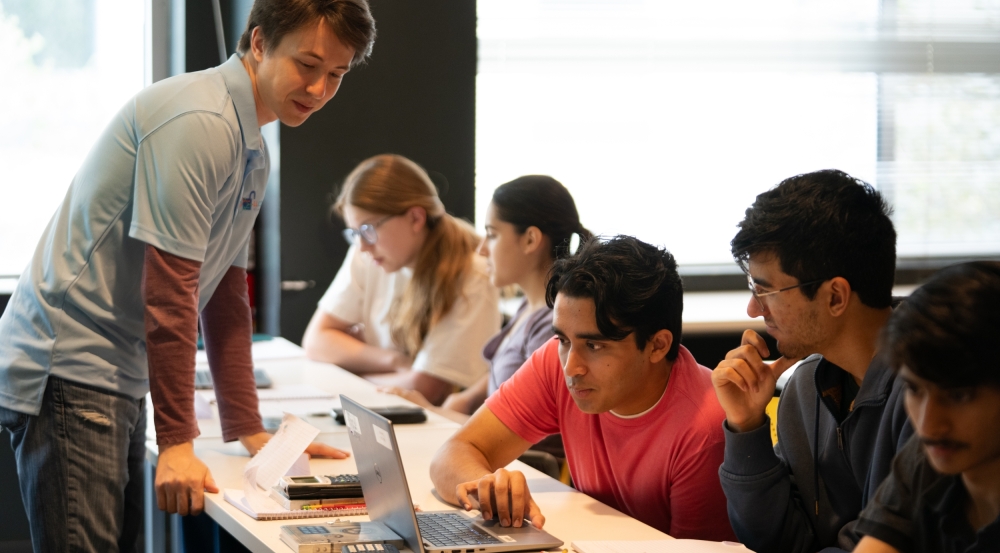
Ian McQuoid stands at the ready to help LLCipher students as they work through a challenge to decipher a secret message without the associated secret key.
Every year in early August, the Lincoln Laboratory (LL) Cipher workshop introduces 25 high school students to cryptography. First-time instructor Joshna Iyengar says, "LLCipher is such a cool program because we teach cryptographic concepts that are often not taught until college." The program offers lessons in abstract algebra and number theory that students use to understand theoretical cryptography. Applying what they learned in lectures, the students built a secure encryption scheme and digital signature, and then investigated recent developments in cryptography, like homomorphic encryption and multiparty computation, both of which enable computation over secret data without revealing those data. Ian McQuoid, a first-time instructor, enjoyed volunteering for this experience: "The students were engaged, interested in the concepts, and proactive in the classroom. I believe that having an understanding of secure and private communication is especially necessary in our computer-driven age, and it's very rewarding to instill an interest in and provide education on this important topic."
Kwajalein Space Week
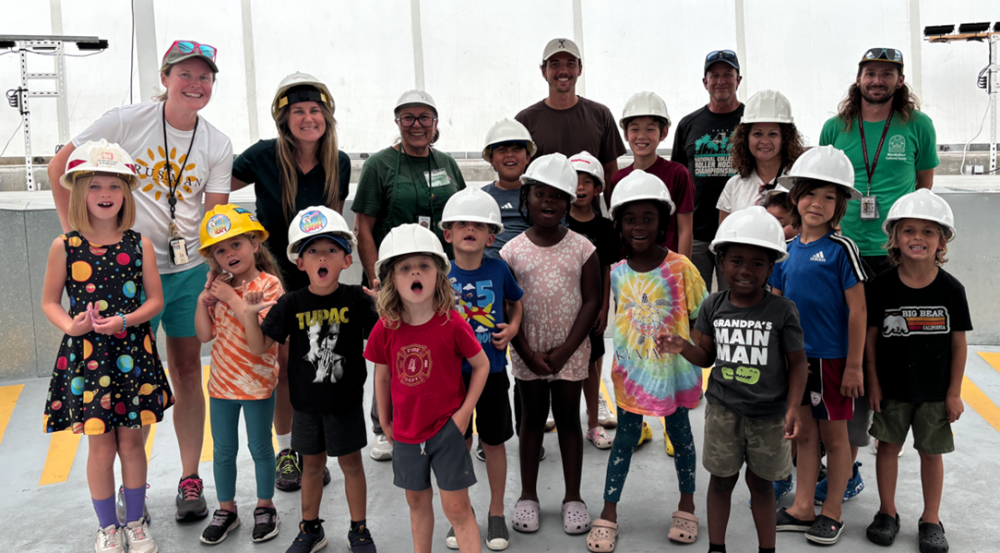
Laboratory staff stationed on Kwajalein provided radar tours and hands-on demonstrations to Marshallese children during Space Week.
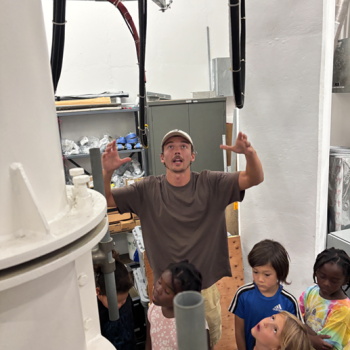
Laboratory staff stationed on Kwajalein provided radar tours and hands-on demonstrations to Marshallese children during Space Week.
In 2024, the Kwajalein School System developed a first-ever weeklong event focused on space. The resulting Space Week brought more than 200 K–12 students to the Ground-Based Radar (GBR). Laboratory staff working at the GBR reprised the tour this year, bringing local students into the radome and onto the radar platform and explaining to them how the radar keeps track of satellites and space debris. The staff also offered special in-school interactive lessons on orbital mechanics and other radar topics. Adam Gjersvik looks forward to hosting this event annually. He said, "Talking with students about how the GBR can observe objects flying in space was an excellent way to connect with the broader island community about our mission on Kwajalein."


