


Homeland Protection
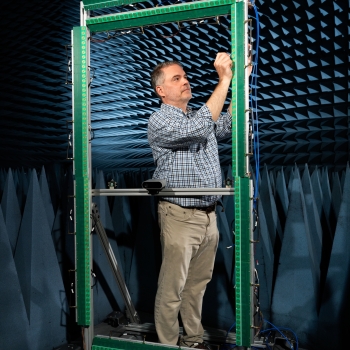
A next-generation sensor system to detect concealed threats on pedestrians undergoes RF testing at Lincoln Laboratory.
Large, open, and easily accessible places such as arenas, fairgrounds, and mass transit systems attract crowds and have limited physical security, making them vulnerable to attacks. Working with the U.S. Department of Homeland Security Science and Technology Directorate, Lincoln Laboratory pioneered two technologies that improve security without disrupting operations: a first-of-its kind sensor system that scans pedestrians for concealed threats like firearms or explosives, and an AI-powered software system that enables operators to rapidly review surveillance video generated by large camera networks. Industry partners are now deploying these technologies at venues nationwide to enhance public safety.
The sensor system generates millimeter-wave imagery 10 times per second at short standoff distances, providing more flexibility than standard stop-and-scan checkpoints. Following successful deployments of the sensor by security company Liberty Defense in arenas, malls, and airports, we are now prototyping a next-generation system that combines higher-fidelity millimeter-wave scans, metal detection, and AI to pinpoint threats.
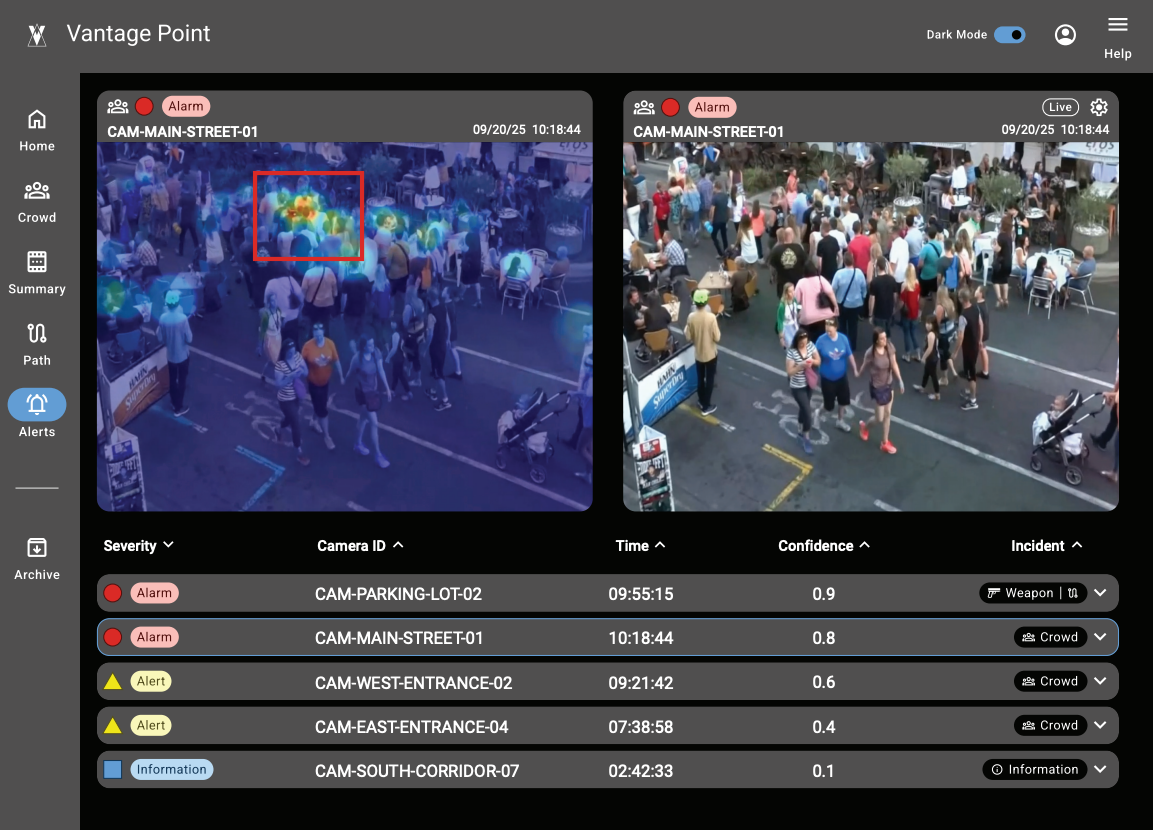
The software platform, called Vantage Point, allows a variety of venue types to experiment with enhanced live monitoring and video investigation capabilities tailored to their facilities.
The video review software uses advanced AI techniques to automatically parse surveillance video, helping security personnel discover and investigate activities of interest. The technology has been deployed to multiple public facilities, both by our organization and through an industry partnership with Doradus Labs. Enhancements are underway to the configurability of the software, allowing operators to set up a range of real-time monitoring and forensic investigation tasks that suit their needs.
Lincoln Laboratory has been a true partner — bringing deep innovation, technical expertise, and a clear vision for commercial deployment. Together, we've brought next-generation technology to market to protect people in public spaces.
Bill Frain
CEO, Liberty Defense
Air Traffic Control
NextGen Weather Processor supports safe and efficient aviation
A major cause of delays in air transportation is uncertainty surrounding the location and intensity of future severe weather events. In response to this problem, Lincoln Laboratory developed the Next Generation (NextGen) Weather Processor (NWP) algorithms to provide comprehensive weather situational awareness and forecasts for Federal Aviation Administration (FAA) air traffic managers and airlines. In late 2024, NWP reached initial operational capability. The system is now deployed at several FAA facilities, and a nationwide rollout is planned.
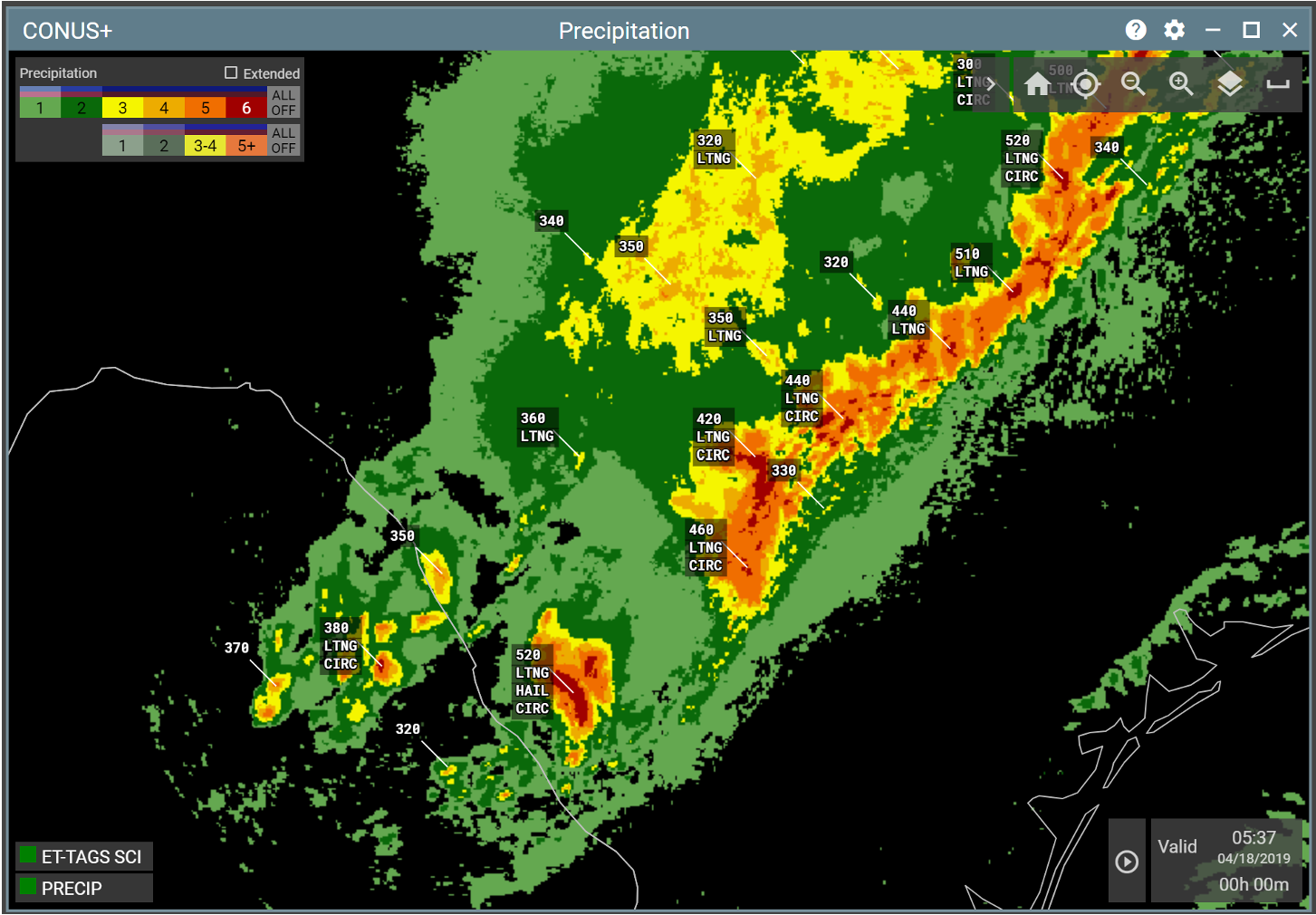
The NWP radar mosaic uses colors and tags to indicate storm-cell hazards such as lightning, atmospheric circulation, hail, and echo tops.
By using radar, satellite, lightning, surface observation, and numerical weather model data, NWP detects rapid storm growth, tracks storm-cell motion, and provides confidence metrics to help users assess the reliability of weather forecasts. Radar mosaics update every 25 seconds to accurately depict storms' location, intensity, and height with extremely low latency. Traffic managers use this information to determine how long to delay a flight until a route has cleared or where to direct flights to safely circumvent storms.
We collaborated with the U.S. government and aviation industry stakeholders for many years to develop NWP. The technology builds upon Laboratory-developed legacy systems that were refined through user engagement and iterative prototyping to translate user feedback into improved system requirements. The resulting technology was transitioned into operational use through close partnership with the FAA and RTX Corporation.
Air Traffic Control
Advanced collision-avoidance system significantly improves rotorcraft safety
With funding from the FAA and DoW, Lincoln Laboratory has continued to develop a new airborne collision-avoidance technology called ACAS X. The ACAS X technology employs advanced computer science techniques such as machine learning and dynamic programming to flexibly and adaptively meet the collision-avoidance needs of a wide range of vehicles and flight operations. We have created variants of ACAS X to meet the needs of crewed transport aircraft, large uncrewed aircraft, and small uncrewed aircraft. The latest variant for rotorcraft, called ACAS Xr, will be finalized in 2026. The ACAS Xr technology issues alerts to pilots at low altitudes, incorporates turning avoidance maneuvers, considers nearby terrain, and reduces unnecessary alerts that could occur in airspace frequented by helicopters.
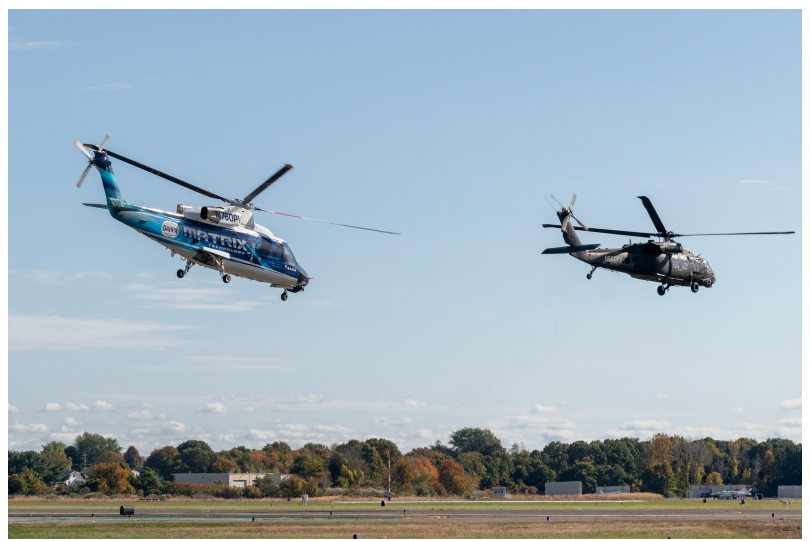
A recent NASA/Sikorsky flight test evaluated the performance of the FAA-sponsored ACAS Xr collision-avoidance system, which is intended for both crewed and autonomous rotorcraft.
When completed, ACAS Xr will be the only certified collision-avoidance capability developed specifically for rotorcraft. Analysis conducted by our researchers predicts that ACAS Xr will reduce the risk of a midair collision by more than 95% while producing alerts that are compatible with typical rotorcraft operations. ACAS Xr will also be a key enabler for advanced air mobility operations, whose vehicles must have a collision-avoidance capability to meet regulatory requirements to fly in the national airspace.
Cyber Security & Information Sciences
Software emulator helps FBI disrupt botnets
Cyber attackers are increasingly targeting small and home office "embedded" online devices (e.g., routers, security cameras) running on outdated and unpatched software. By exploiting these vulnerabilities, attackers create networks of malware-infected devices (botnets) that they can remotely control to perform malicious activities such as distributed denial-of-service attacks, data theft, and further malware propagation. Botnets often comprise hundreds or thousands of unique devices — each with their own hardware, software, and configuration — making manual, sequential methods of testing mitigations impractical.
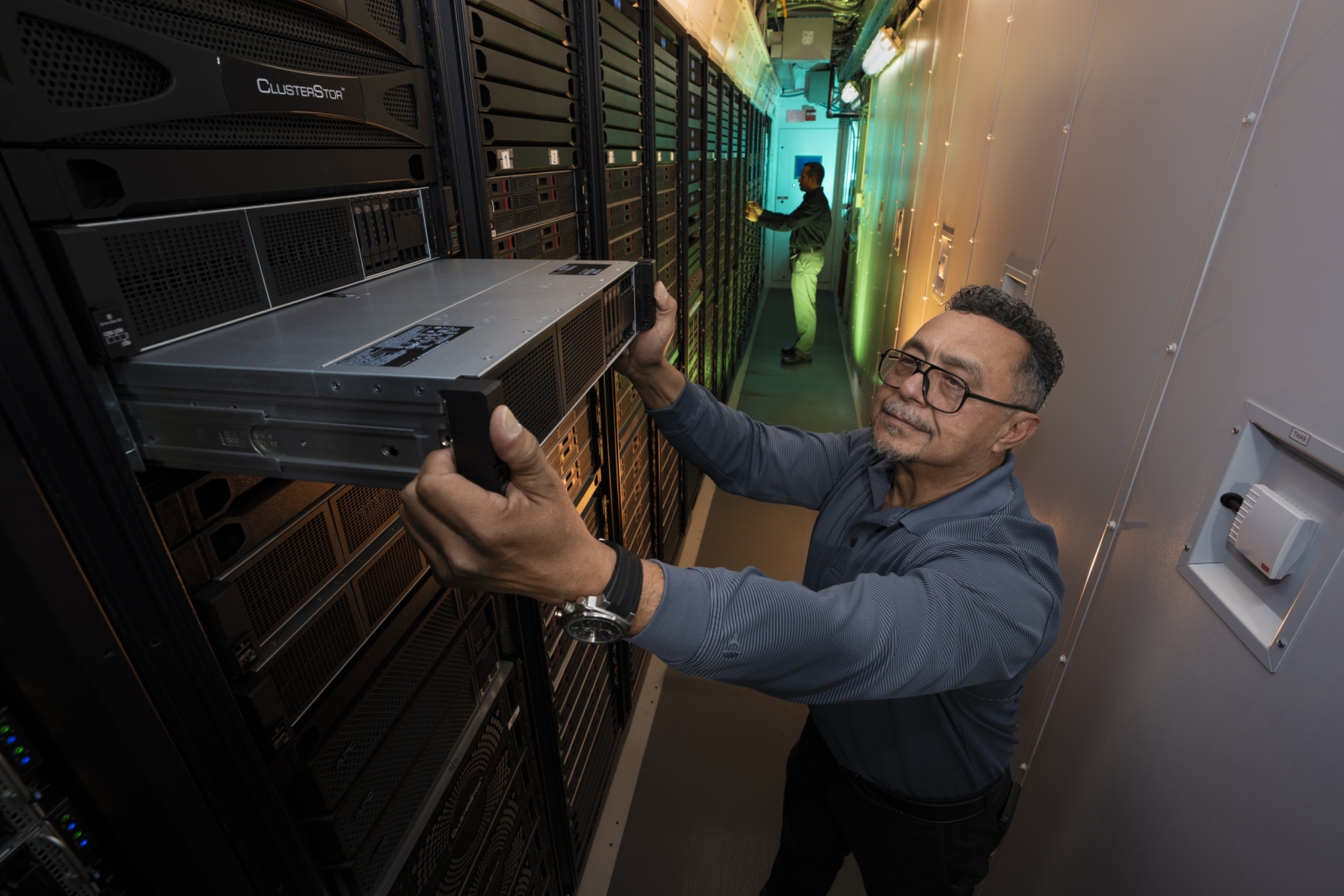
Home to an AI supercomputer ranked as the most powerful at a U.S. university in 2025, the LLSC provided the high-performance computing needed to quickly develop and test a botnet emulator for the FBI. Here, Antonio Rosa inspects LLSC equipment.
To address this challenge, we developed tools for cybersecurity analysts to examine, patch, and test embedded device software without requiring access to the physical hardware. These tools can emulate and test each device configuration in parallel using the computational power of the Lincoln Laboratory Supercomputing Center (LLSC).
At the request of the Federal Bureau of Investigation (FBI), we used this automated capability to test software patches against 300 emulated botnet devices, delivering a full validation of the proposed mitigation within two weeks. This capability was critical to the FBI’s court-authorized operation to disrupt the botnet. More than 200 government developers and cyber warfighters have been trained on the tool suite, now a cornerstone for mission-critical cyber defense projects across multiple government agencies.


