


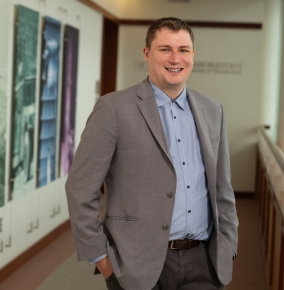
Ian DeTore
What does your work focus on?
I develop software analysis and visualization tools for complex communication systems, particularly in strategic SATCOM [satellite communications]. This work sits at the intersection of software engineering, systems integration, data visualization, and machine learning. I architect software systems spanning the full software stack for both internal use by Laboratory engineers and external use by our sponsors. These software systems acquire live telemetry data from communication devices through various interfaces, process binary data from field-programmable gate arrays and clean those data into structured formats, store historical results in SQL [Structured Query Language] databases, and present real-time analytics through web graphical user interfaces and touchscreen displays, all supported by concurrent pipelines.
Recently, I've been leading the development of a network-isolated retrieval-augmented generation pipeline — a system that combines document search with AI-generated responses — on a supercomputer cluster using offline large language models to help engineers search and reason over technical documentation totaling more than 12,000 pages. This system also supports multimodal retrieval across text, figures, diagrams, and tables, enabling engineers to find relevant information while retaining traceability to the source material.
What is the most exciting and/or challenging part of your work?
The most exciting and challenging aspect of my work is the wide breadth of knowledge required, including in radio-frequency engineering, software engineering, embedded systems, digital signal processing, data science, and AI. For example, building real-time telemetry systems requires understanding both low-level signal processing constraints and high-level user interface design, as well as collaboration with hardware engineers and analysts. The interdisciplinary nature of the work keeps me engaged and brings new technical challenges for me to solve with every project. Developing effective solutions calls for both creativity in the software architecture and a strong understanding of the overall system.
What excites you most about the future of your field?
I'm most excited about the continued integration of machine learning and traditional engineering methods. In SATCOM, a need for physics-based models, simulations, test data, and subject-matter experts will always exist. At the same time, I'm actively researching where modern machine learning methods can continue to provide value — such as identifying patterns, connecting ideas across multiple sources, and helping engineers solve complex problems more efficiently. I'm also following advancements in how quantum technologies may impact secure communications, and co-chaired a quantum session at the 2025 IEEE High-Performance Extreme Computing Conference.
What are your hobbies?
I enjoy writing music, snowboarding, and traveling. My preferred creative approach is combining guitar with electronic production to create unique sounds blending live and programmed instruments; one of my friends has a recording studio where we experiment with new ideas. I've been snowboarding for more than 10 years and have explored terrain on the East Coast, in Utah, and in Colorado. My favorite countries I've visited include Japan, Guatemala, Iceland, and Vietnam because of their unique landscapes and cultures. In Guatemala, I hiked an active volcano, and, in Japan, I was fascinated by the efficiency of the high-speed rail system.