Wildfire Working Group
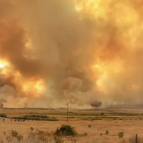
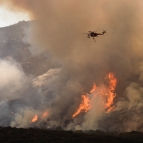
Wildfires are a growing national challenge caused primarily by the encroachment of civilization into fire-adapted ecosystems at the wildland-urban interface (WUI). Wildfire risk is exacerbated by evolving seasonal weather trends and historical forest management practices through the mid-1900s. In 2020, the WUI covered approximately 200 million acres across the United States, leaving nearly 50 million residences across 70,000 U.S. communities vulnerable to wildfire. In a 2023 report, the U.S. Congress Joint Economic Committee estimated an annual economic burden from wildfires of $394 to $900 billion.
To address this escalating wildfire crisis, Lincoln Laboratory partnered with non-profit organizations from across the nation to form the Wildfire Working Group (WWG). The group’s goal was to accelerate the government’s ability to address critical wildfire intelligence capability gaps at scale from a whole-of-government, systems perspective. Toward this goal, the group applied their collective expertise to identify wildfire intelligence gaps, investigate mitigation strategies in seven key areas, and explore relevant emerging technology and capabilities applicable now or projected to mature in the next five to ten years. In particular, Lincoln Laboratory focused on rapid wildfire detection and persistent surveillance, as well as fuels intelligence.
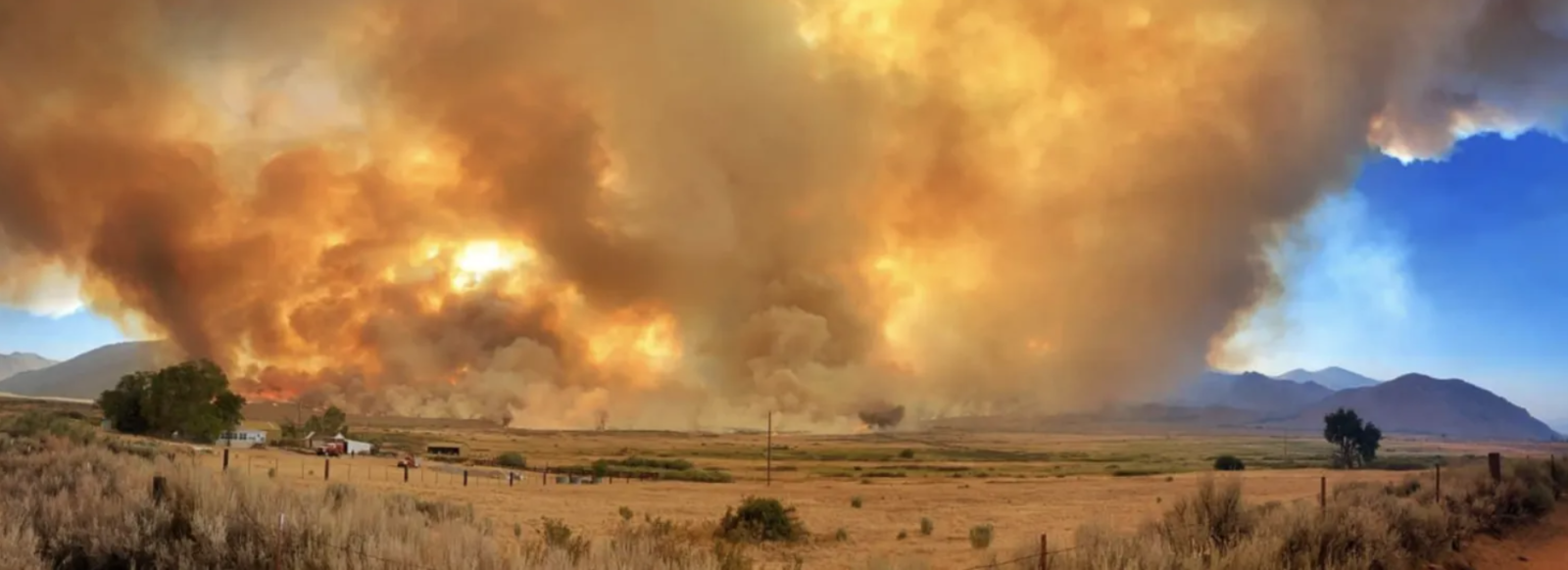
In their results, the WWG noted that the wildfire community is highly segmented between federal, state, tribal, and local entities, and that federal policy-related structural and organizational challenges have created barriers to implementing solutions. In addition, federal agency technologists are overwhelmed by an avalanche of ideas from private industry, academia, and government laboratories — an issue exacerbated by a lack of consolidated, prioritized technology needs. Although no silver bullets exist, no technology miracles are required to significantly narrow the seven critical wildfire mitigation gaps.
Participants of the WWG included the Aerospace Corporation, the Johns Hopkins University Applied Physics Laboratory, the MITRE Corporation, MIT Lincoln Laboratory, the National Science Foundation’s National Center for Atmospheric Research, and the Charles Stark Draper Laboratory.
Read more on the Wildfire Working Group's work here. For inquiries, contact Anne McGovern.