SQUILL Foundry
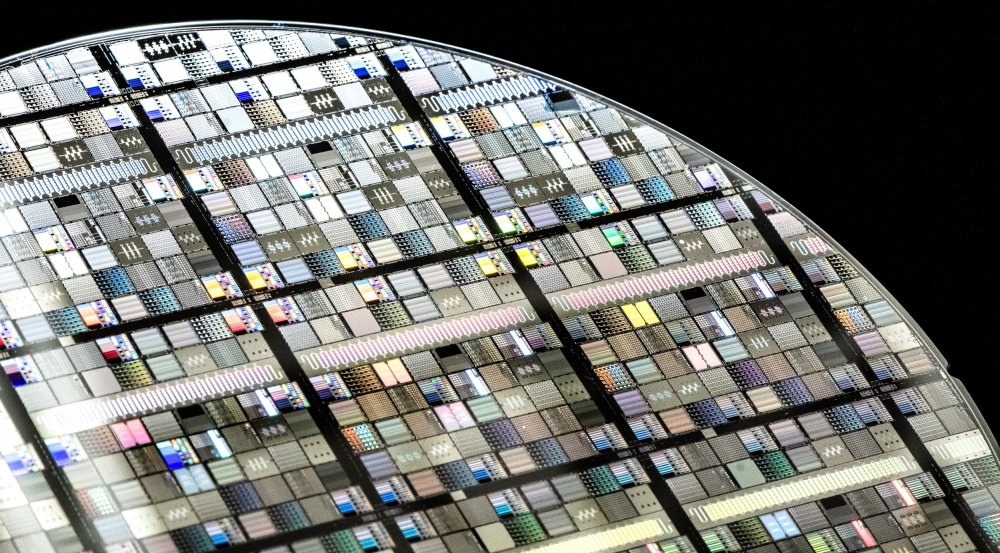
In the quest to develop a quantum computer, the ability to fabricate high-quality superconducting circuits provides a major advantage. These circuits, when operated at extremely low temperatures, can be operated as quantum bits (qubits), the basic units of data in a quantum computer. Through its Superconducting Qubits at Lincoln Laboratory (SQUILL) Foundry, Lincoln Laboratory is sharing its advanced fabrication capabilities with the U.S. research community, accelerating progress across U.S. government-funded programs.
Begun by the Laboratory for Physical Sciences as a seedling in 2021 and then expanded to a multiyear program in 2023, the SQUILL Foundry currently supports projects from over 30 research groups spanning academia, industry, and government laboratories. Researchers submit custom designs of superconducting qubit devices to Lincoln Laboratory for fabrication. To date, the Laboratory has delivered more than 400 fabricated devices to researchers investigating a range of topics — from probing fundamental questions about quantum information to developing the building blocks of quantum memory. The SQUILL Foundry also provides users with pre-characterized qubit devices that users can utilize to qualify their measurement infrastructure. Results from SQUILL Foundry devices have been included in more than 20 research manuscripts and over 100 academic presentations.
The advanced toolsets in the Microelectronics Laboratory enable the SQUILL Foundry. By transitioning its superconducting qubit fabrication process from 50 to 200 mm wafers, the Laboratory enabled a 20-times increase in the number of chips producible per wafer and access to new capabilities, such as automated defect inspection, for ensuring circuit quality.
For more information, contact [email protected].
Related
News

MIT President Sally Kornbluth joins Laboratory Director Melissa Choi for fireside chat

MIT Quantum Initiative launches postdoctoral fellowship program

New laboratory at MIT aims to advance quantum research for the nation
Publications
A cloud-based brain connectivity analysis tool
Staff

Cyrus F. Hirjibehedin

Mollie Schwartz