Projects

PANDA – Platform for Architecture-Neutral Dynamic Analysis
An open source platform helps analysts quickly reverse engineer large, real-world binary systems to better analyze how software executes.
Tags

Urban Counter-UAS Operational Prototype
The prototype is enabling DHS to test technologies that can counter the threats posed by commercial drones.
Tags
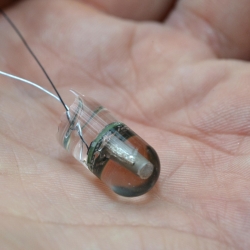
EnteroPhone™
A wireless, ingestible device monitors heart and breathing rates by listening to the body's sounds and senses core temperature, all from within the gastrointestinal tract.
Tags
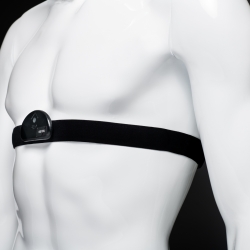
Physiological Status Monitoring
New sensors that gather data on a soldier's physiological state can help prevent heat-related injuries.
Tags


Prototype Airborne Contested Environment Communication Relay (PACECR)
A system enables aircraft to replace a satellite communications network.
Tags
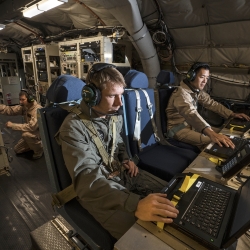
Protected Antijam Tactical SATCOM
Satellite communications technologies enable the U.S. military to maintain connectivity in the field.
Tags
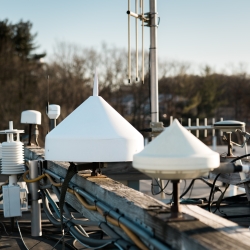
GPS Support, Test, and Research Laboratory
We conduct research on the performance and vulnerability of GPS devices embedded in military and civilian systems.
Tags

Optical Processing Architecture at Lincoln
Our researchers developed a software architecture that allows analysts to rapidly run algorithms on the volumes of sensor data collected about space objects.
Tags