


Projects

Data-Centric Secure Computing
A suite of technologies protects data both at rest and in transit by providing access to secure computation nodes distributed throughout a network.
Tags

Geostationary Operational Environmental Satellite Series
The Laboratory's long-term collaboration with NOAA and NASA on environmental monitoring satellites has led to revolutionized weather imagery and products and improved detection for space and solar phenomena.
Tags

Secure Small Satellite Processing Platform
A secure reference architecture enables satellites to recover from cyberattacks and carry on their missions.
Tags
Tactical Key Management
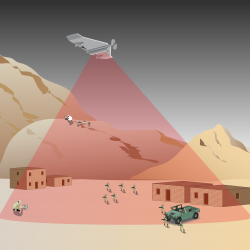
Cryptographic keys can now be created and securely distributed in real time during a mission.
Tags
High Assurance Design Environment
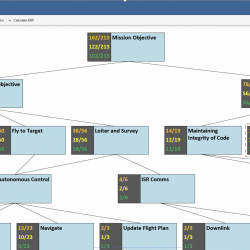
A new tool enables mission system designers to design for functionality and security together and provide evidence for how design choices affect a mission’s security posture.
Tags

Seismic-Metamaterial Cloaking to Protect Infrastructure
Novel metamaterials deployed to provide a barrier around critical structures are designed to redirect and attenuate hazardous seismic waves.
Tags
Transparency by Design Network
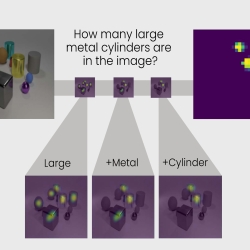
A new neural network model reveals some of the mystery behind the decision-making capability of artificial intelligence systems.
Tags
Haystack Ultrawideband Satellite Imaging Radar
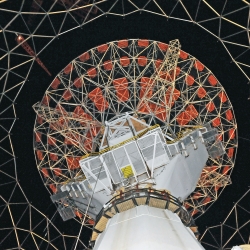
Lincoln Laboratory created the world's highest-resolution radar for imaging of space objects in support of space situational awareness.
Tags
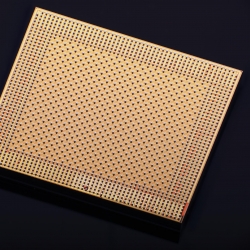
Advanced ASIC System on Chip for CLASS
A power-efficient application-specific integrated circuit system on chip that performs up to 2 trillion computations per second has potential for use in mobile communication systems.
Tags
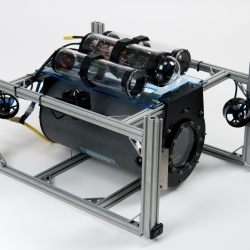
Undersea Optical Communications
A system that enables robust, long-distance communications between underwater vehicles exploits laser technology.
Tags