


Projects
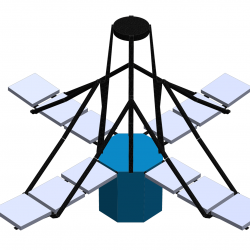
Deployable In-Space Coherent Imaging Telescope
Technologies enabling the deployment of an expandable telescope from a small spacecraft could pave the way for the development of other payloads for small satellites.
Tags
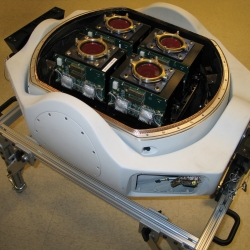
Multi-Aperture Sparse Imager Video System
An airborne system provides high-resolution wide-area video imagery and onboard data processing to enable real-time monitoring of suspicious human activity.
Tags
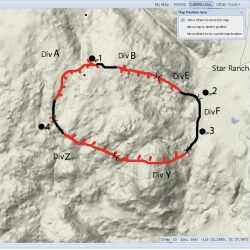
Next-Generation Incident Command System
Emergency agencies around the world are using NICS to coordinate rapid and organized response to disasters.
Tags

Air Vehicle Survivability Evaluation
For more than 40 years, Lincoln Laboratory has provided the Air Force with assessments on potential technologies for assuring the survivability of Air Force aircraft.
Tags
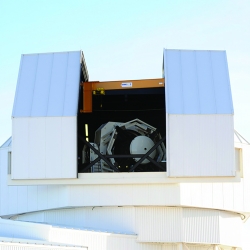
Space Surveillance Telescope
A unique curved focal surface enables a highly sensitive telescope capable of surveying broad swaths of deep space to detect the faintest objects in the night sky.
Tags

Large-scale Automated Vulnerability Addition
Computer scientists can test techniques for finding vulnerabilities in code.
Tags
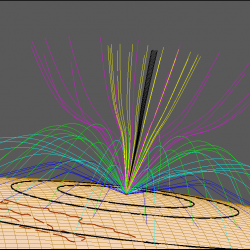
Applied Space Weather
New algorithms improve the resilience of satellite and RF systems to impacts from space weather.
Tags

Transiting Exoplanet Survey Satellite
A new planet hunter will spend the next two years searching for exoplanets, including those that could support life.
Tags
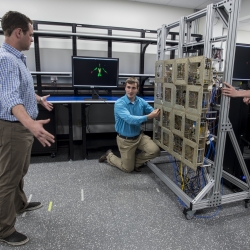
Video-Rate Standoff Microwave Imaging System
The system can rapidly and discreetly detect threat items concealed under clothes or hidden in bags of people in crowded public spaces.
Tags

PANDA – Platform for Architecture-Neutral Dynamic Analysis
An open source platform helps analysts quickly reverse engineer large, real-world binary systems to better analyze how software executes.
Tags